
The international conference titled “After Totalitarianism: Museums, Memory and the Belarusian Perspective,” organised by the Free Belarus Museum, was held in Warsaw. Participants at the conference discussed how museums and research institutions address the trauma of the totalitarian past, state violence, the memory of victims, and the preservation of heritage.
The first day of the conference was devoted to the memory of repression, historical revisionism, complex legacies and local practices of commemoration. On the second day, discussions focused on memory policy, war and transnational narratives, Belarusian memory and identity, as well as migration and forced resettlement.
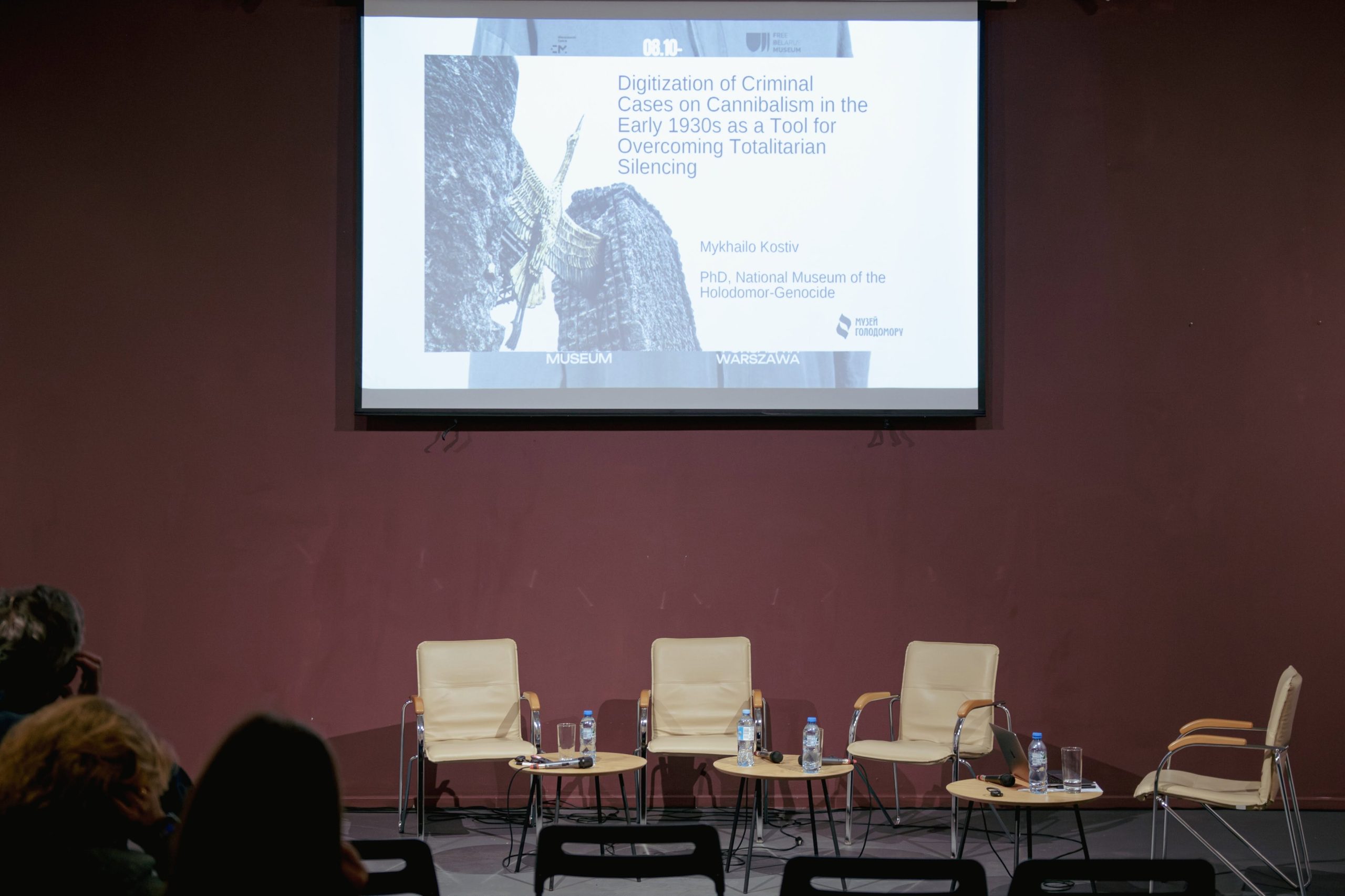
During a thematic session organised by the National Museum of the Holodomor-Genocide, Mykhailo Kostiv, the Head of the Research Department on Genocide, Crimes Against Humanity, and War Crimes, presented his findings. His presentation, titled ‘The digitisation of criminal cases relating to the Holodomor as a tool for overcoming totalitarian silencing,’ focused on the Museum’s experience in making public criminal cases concerning cannibalism and corpse-eating during the Holodomor, which had long been largely inaccessible to researchers.
In addition, the speaker described the various types of documents found in those cases. Mykhailo Kostiv emphasised that openness and the full disclosure of the cases help to avoid speculation regarding archival materials that reveal instances of violence during the Holodomor, in particular such tragic and controversial issues as cannibalism and corpse eating. The speaker also highlighted the local aspects of those materials, which preserve information about the specific features of life in particular settlements, record people’s names, and allow us to trace the details of their lives during the Holodomor. At the same time, the speaker emphasised the need for a thorough source-critical analysis of the materials.
The National Museum of the Holodomor-Genocide extends its thanks to the organisers, moderators and all participants for the open discussion and professional solidarity.
Photo: Museum of Free Belarus, Daria Krotova.