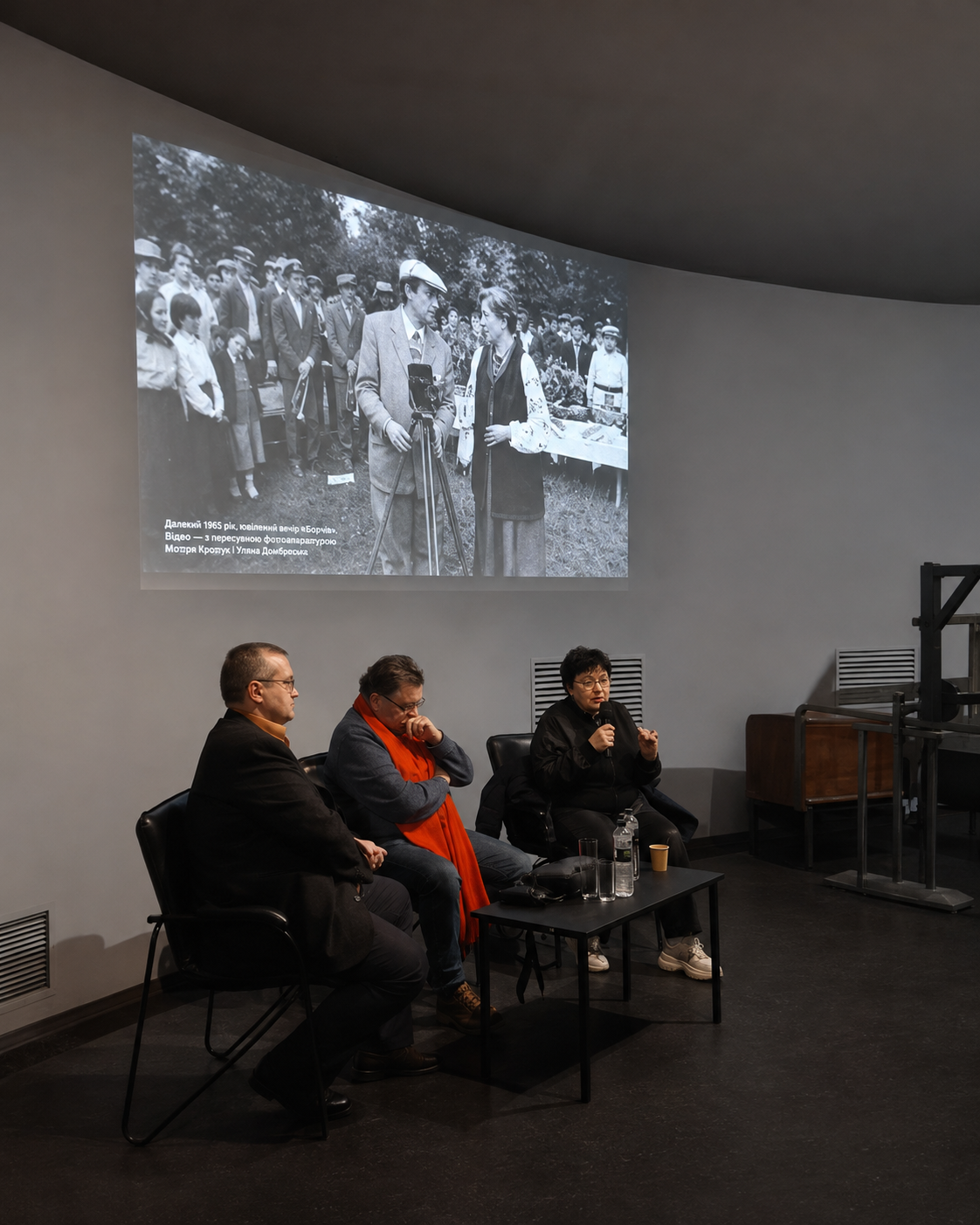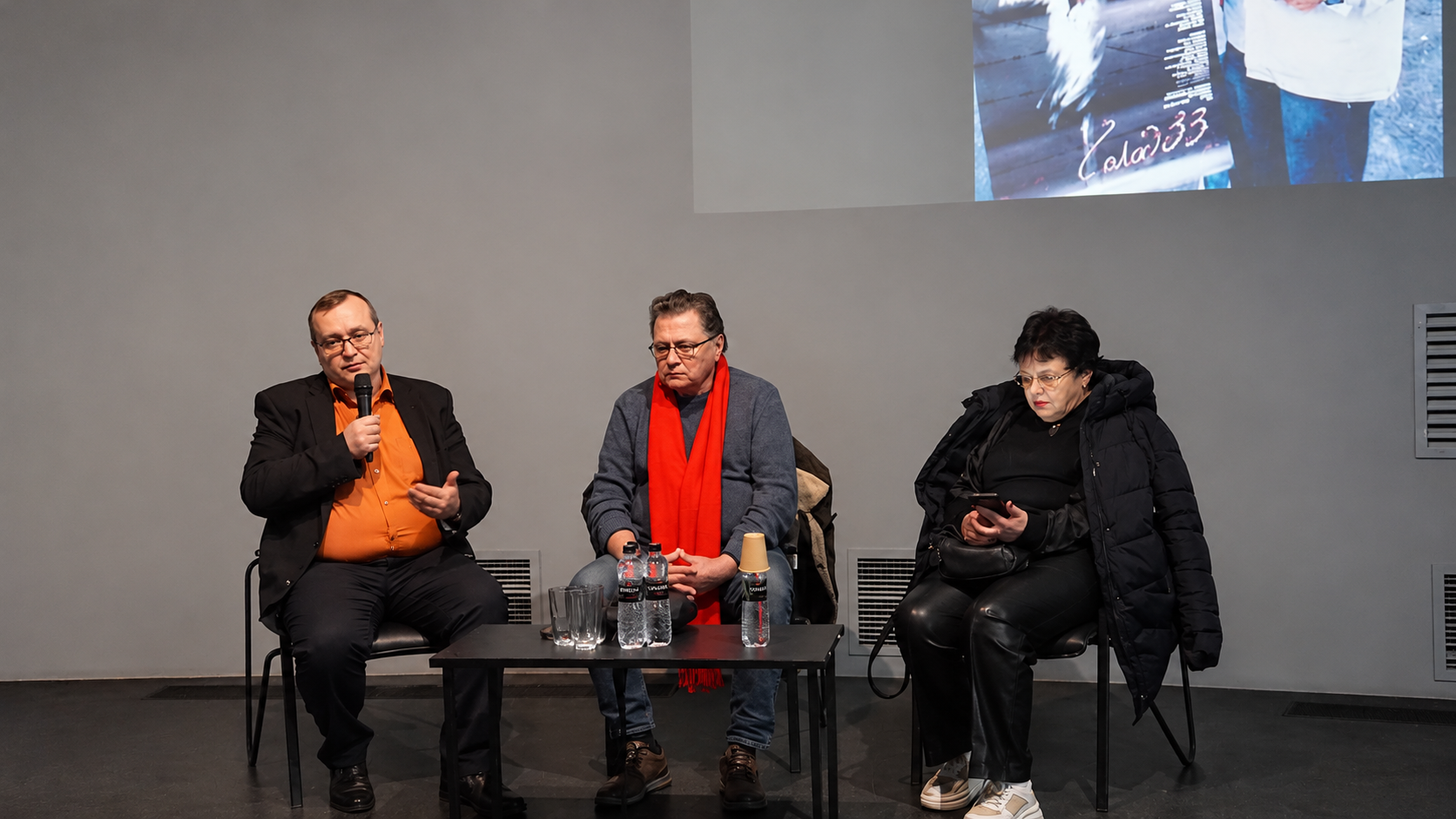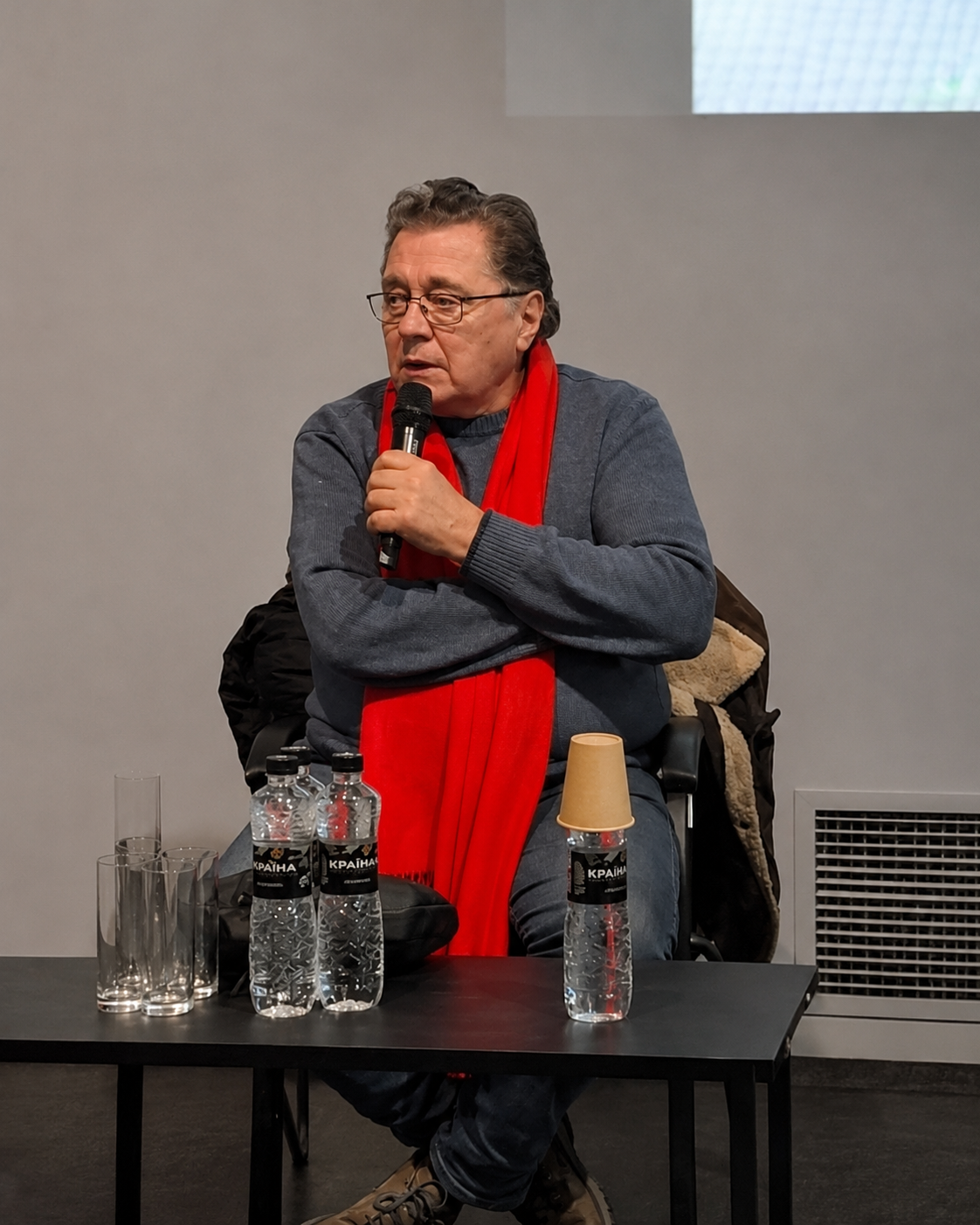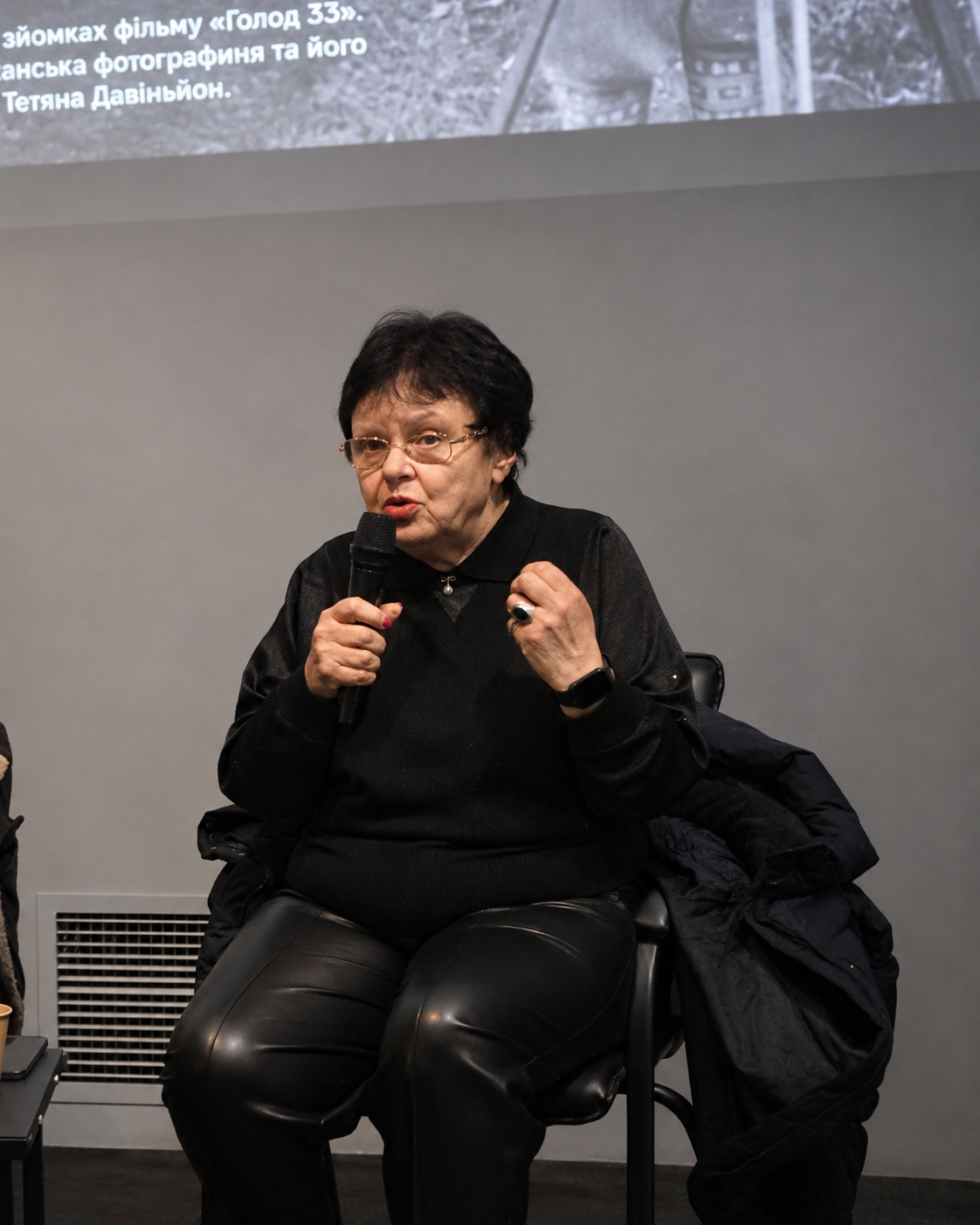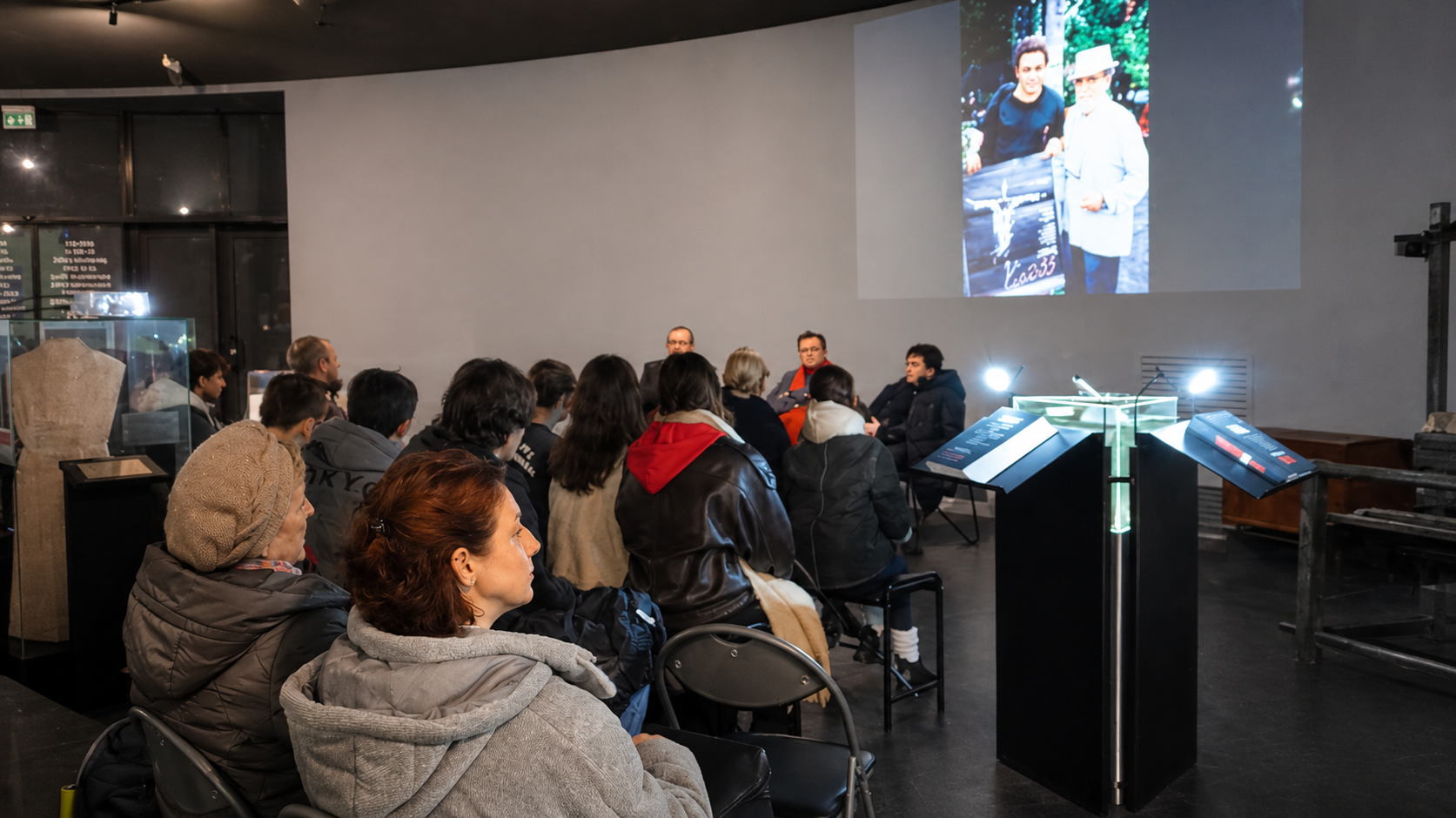

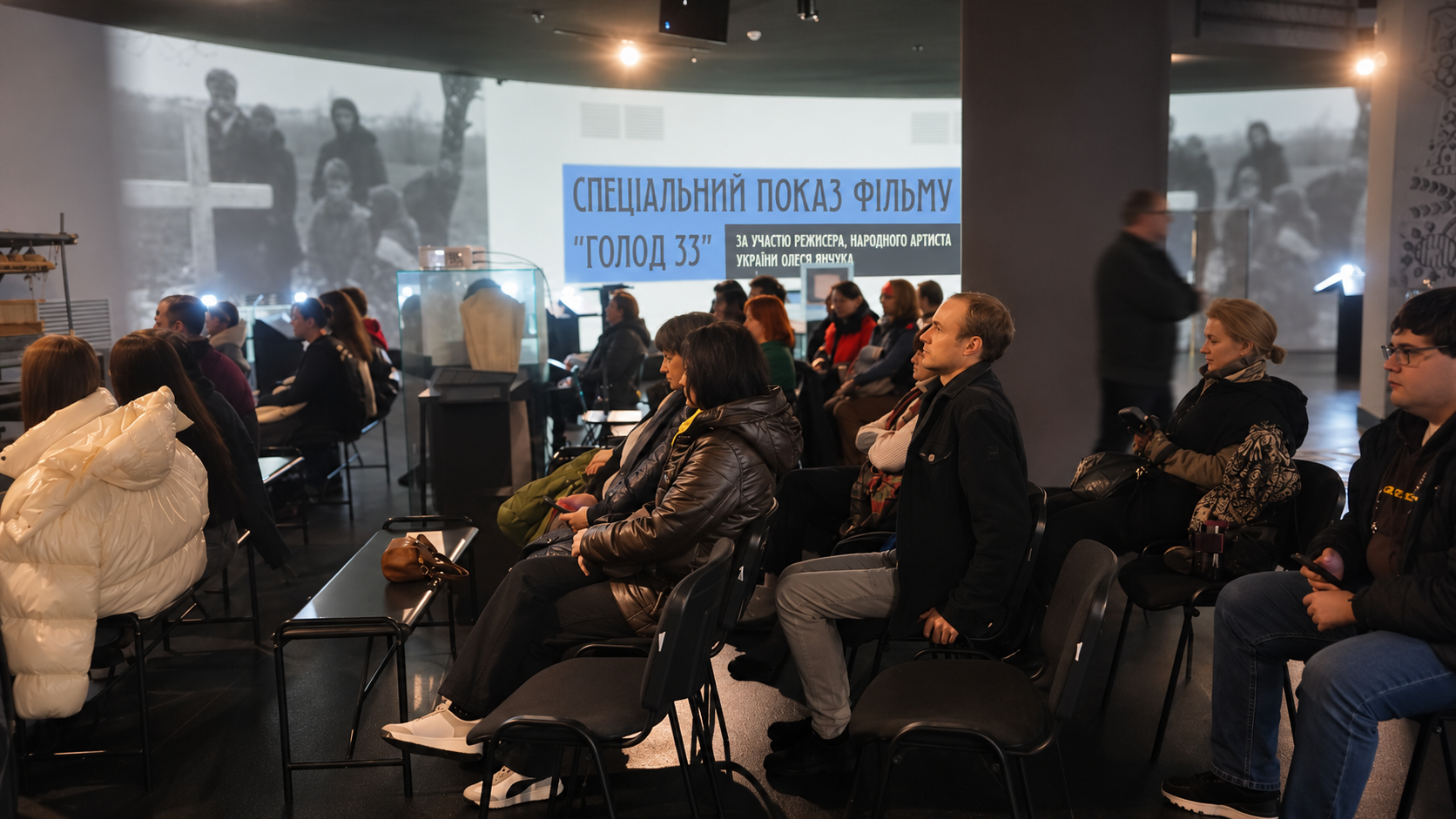
On November 21, a special screening of the feature film “Famine 33” was held at the Holodomor Museum. This first Ukrainian feature-length film about the Holodomor is celebrating its 35th anniversary this year. Following the screening, there was a meeting with film director Oles Yanchuk and writer Nataliia Dziubenko-Mace, who is the widow of American historian James Mace, the film’s academic consultant.
The moderator of the event, Andrii Ivanets, a senior research fellow at the Museum, recalled that the film premiere took place exactly 35 years ago at the “Ukraina” Palace. In that same year, 1991, the film won the top prize at the 1st All-Ukrainian Film Festival in Kyiv. And on 30 November, it was broadcast on television. It was the night before the December referendum on independence. After watching this film, many people voted quite differently from how they had intended just a day earlier.
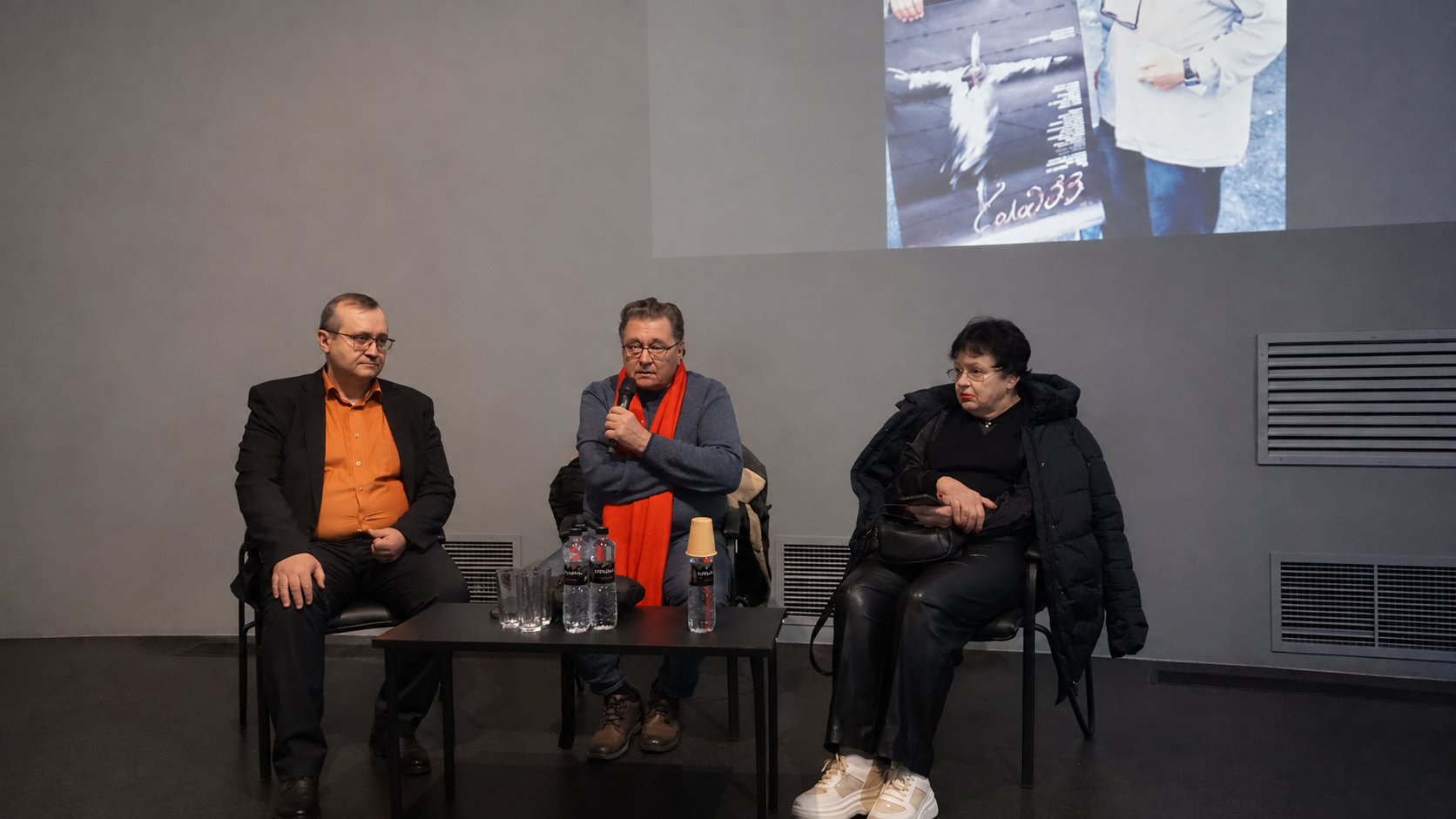
On how the idea for the film came about, where they sought funding, how he met Vasyl Barka, whose novel the film is based on, and how the filming of the most challenging scenes took place, the director, People’s Artist of Ukraine Oles Yanchuk, explained :
“I went to a Soviet school, where the teachers never told us anything about the famine. And when the information came to light, I thought: it would be good to make a film about it. Then there was only one documentary on the subject, “Harvest of Despair” (1984) directed by Yurii Luhovyi from Canada. I saw it in 1989 on a video cassette sent from the US. It wasn’t until 1990 that the Communist Party recognised the famine. And then, quite by chance, I met the American historian James Mace in Kyiv. I invited him to a screening of my debut short film, after which Mace said he was ready to help make a film about the Holodomor.”
James Mace not only served as a consultant on the film, but he also appeared in a scene where he played an American. Unfortunately, the scene did not make it into the final cut, as it clashed with the overall atmosphere of the film. However, those present were still able to see what Mace might have looked like in the film in the role of journalist Walter Duranty – a unique photo from the shoot was tracked down and shown to us by Nataliia Dziubenko-Mace.
“I knew that James had been involved in making this film, but I only found out today for the first time just how deeply he was involved in the filming process. And for me, it’s a pleasant surprise. James has been involved in so many projects that, even now, I sometimes find out about them by chance and think: how lucky we were that he came here, to Ukraine, and that we had the chance to learn from him. As a very young man of 17, he first heard that in Ukraine, in the heart of Europe, people were being massacred on a massive scale, whilst the world knew about it but remained silent – and continues to do so to this day. He was shocked. He even had an argument with a lecturer because he couldn’t believe such a thing could happen. Then he picked up Khrystiuk’s first book on Ukrainian history. He read it with a dictionary in hand… Then he defended his thesis. And eventually he became Robert Conquest’s assistant whilst working on the book “The Harvest of Sorrow”, and later headed the US Congressional Commission on the Famine in Ukraine of 1932–1933.”
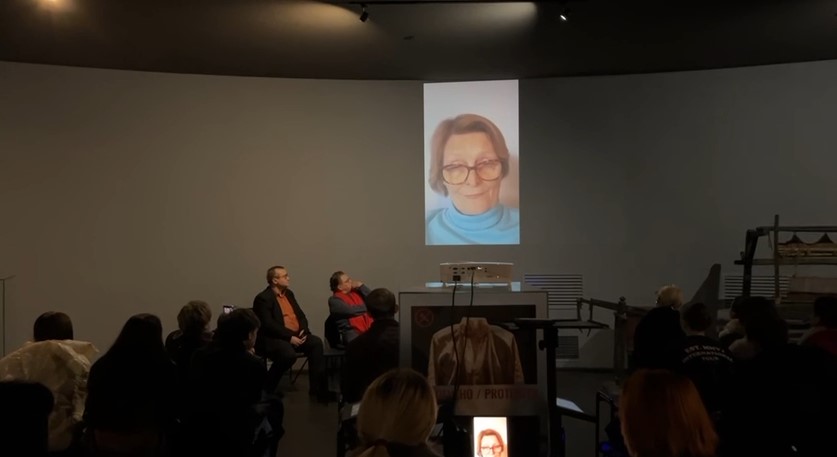
Galina Sulima, a film actress who played one of the leading roles in the film “Famine 33”, addressed those present via a video message:
“Why has our film stood the test of time? Why is it still relevant to this day? Because I see it as a manifesto of our will, our strength, our freedom and our identity. When we were filming it, I was absolutely, one hundred per cent convinced that we would never experience anything like this again. But that very same enemy wants to destroy our country and us once more. I believe that they were unable to destroy us back then and will not be able to destroy us now: neither our state, nor us, nor the future of our children and grandchildren. It won’t work. Because we are a free people. And we always will be.”
“Famine 33” remains to this day one of the most candid and truthful films about the Holodomor. As a reminder, the film is freely available, and we recommend watching it. We must not forget what happens to a people who lose their state and their independence…