
How can we engage audiences thousands of kilometres away from Ukraine with the story of the Holodomor? A media campaign in five languages, carried out with the support of the Canadian government, received around 26 million views, whilst its information pages recorded over 325,000 visitors from 13 countries.
The international recognition of the Holodomor as an act of genocide took place in several stages. Estonia and Australia were the first to recognise it in 1993. In the early 2000s, Canada, Hungary, Lithuania and Poland also adopted similar declarations. In 2006, the Verkhovna Rada of Ukraine recognised the Holodomor as genocide, after which international recognition became one of the priorities of Ukrainian diplomacy. This bore fruit: as of February 2022, around 15 countries had recognised the Holodomor as an act of genocide.
With the start of Russia’s full-scale invasion in February 2022, questions about the background and historical roots of the war began to emerge abroad, alongside campaigns in support of Ukraine. The history of the Holodomor has taken on new relevance and has even become more understandable to an international audience. In 2022–2023, a new wave of recognition occurred, with Germany, France and Italy joining the list. As of October 2026, 28 countries had recognised the Holodomor as genocide.
However, in many countries of the Global South, a collective term encompassing nations with diverse histories and experiences, little is still known about the Holodomor. For decades, the Soviet authorities had concealed this crime, whilst labelling the testimonies of journalists and diplomats as ‘slander’. Today, this practice of denial is perpetuated by Russian state propaganda. In addition, there is a lack of accessible, high-quality material on the Holodomor in the languages of local audiences.
But It is now especially important for Ukraine to express its voice in the Middle East, Latin America, and Africa, particularly in discussions about our country’s history and culture.
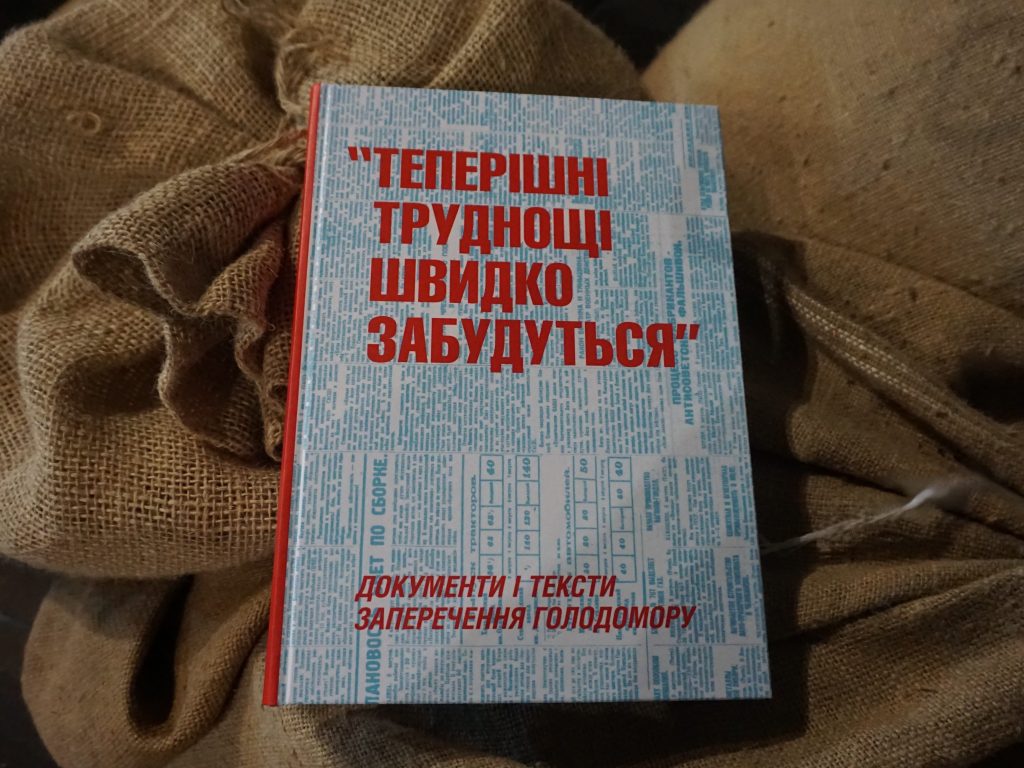
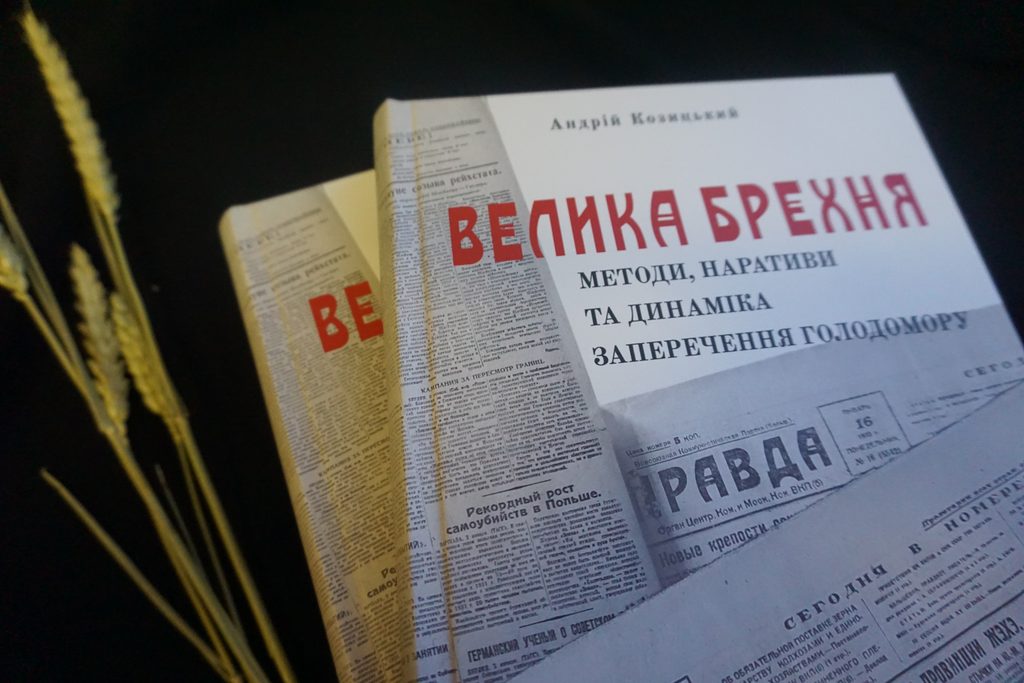
Publications by the National Museum of the Holodomor-Genocide, which examine the mechanisms of Soviet propaganda, the concealment of the truth and the methods used to deny the Holodomor of 1932–1933. Available from the Museum shop
This year, we, the Holodomor Museum staff, helped to create a media campaign designed to shed light on how audiences in 13 countries around the world react to the Holodomor subject.
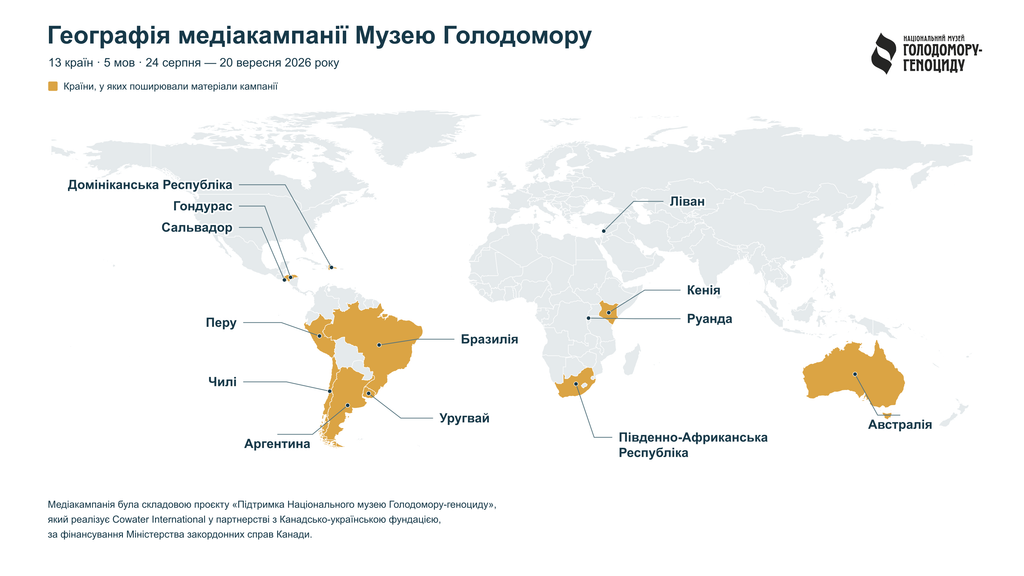
This initiative ran from 24 August to 20 September 2026 and covered 13 countries: Argentina, Brazil, Uruguay, Chile, Peru, Honduras, El Salvador, the Dominican Republic, Lebanon, Kenya, South Africa, Rwanda and Australia.
The media campaign was part of the project ‘Support for the National Museum of the Holodomor-Genocide’ implemented by Cowater International in partnership with the Canada-Ukraine Foundation and funded by Global Affairs Canada.
Besides English, the support from our partners also enabled us to adapt the information materials into languages spoken in the Global South, Portuguese, Arabic, Spanish and French, and to organise their targeted distribution. For us at the Museum, this was an opportunity to make initial contact with audiences who might otherwise not have had access to the museum’s materials, and to gather data for the next steps.
How to make distant history understandable
The primary challenge of this campaign was to engage the audience with a narrative about a country that is both geographically and culturally distant. What would make someone living in Nairobi or Montevideo pause to read a post about the Holodomor whilst scrolling through their social media feed?
That is precisely why the decision was taken to use the technique of drawing parallels: to show that a story dating back over 90 years is much closer to the present day than it might seem at first glance. The key message is: ‘Soviet tactics of the 1930s. Does that ring a bell?’
The campaign’s content was based on the concept set out in the essay ‘Soviet Genocide in Ukraine’ by Raphael Lemkin, the author of the term ‘genocide’. In the early 1950s, he described the USSR’s actions against the Ukrainian people as four blows: the destruction of the intelligentsia (‘the brain of the nation’), the clergy (‘the soul of the nation’), and the peasantry (‘the body of the nation’), as well as the fragmentation of the Ukrainian people through forced resettlements.
Short six-second videos and images contrasted Soviet propaganda with historical evidence; posters depicting prosperity were juxtaposed with archive photographs that revealed the realities of the time. The materials available in English, Spanish, Portuguese, French, and Arabic invite viewers to visit the information page and learn more about the Holodomor.
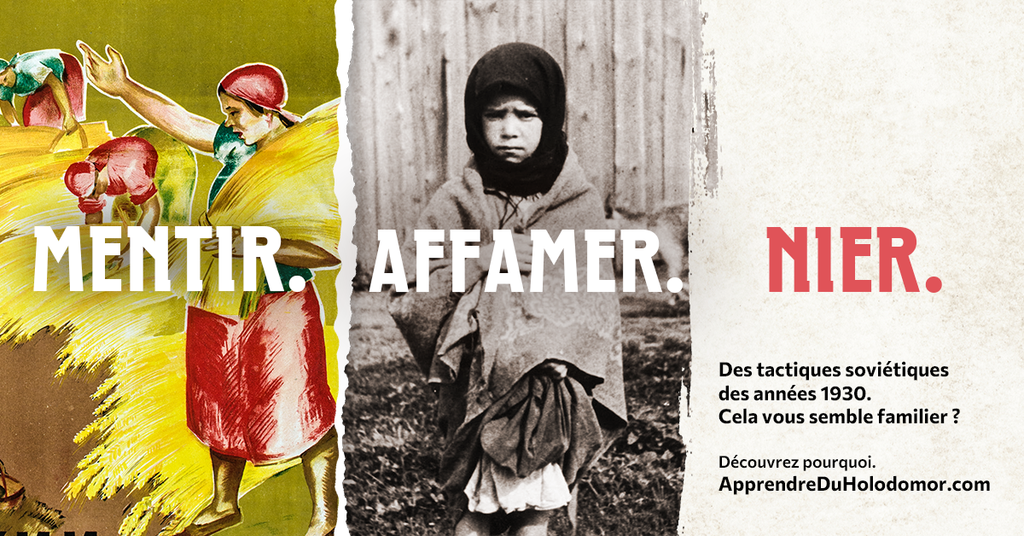
An example of static materials from the Holodomor Museum’s media campaign for countries in the Global South, in French. (c) MixTape
Right on the information page itself, visitors could see four interactive cards referring to Lemkin’s concept: ‘Silence’ — on the persecution of the Ukrainian intelligentsia; ‘Divide’ — on the destruction of the church and ties within communities; ‘Starve’ — on the deliberate deprivation of food; ‘Deny’ — on the forced expulsion of Ukrainians and the erasure of traces of their lives on their native soil. Each card featured an archive photograph and a brief explanation.
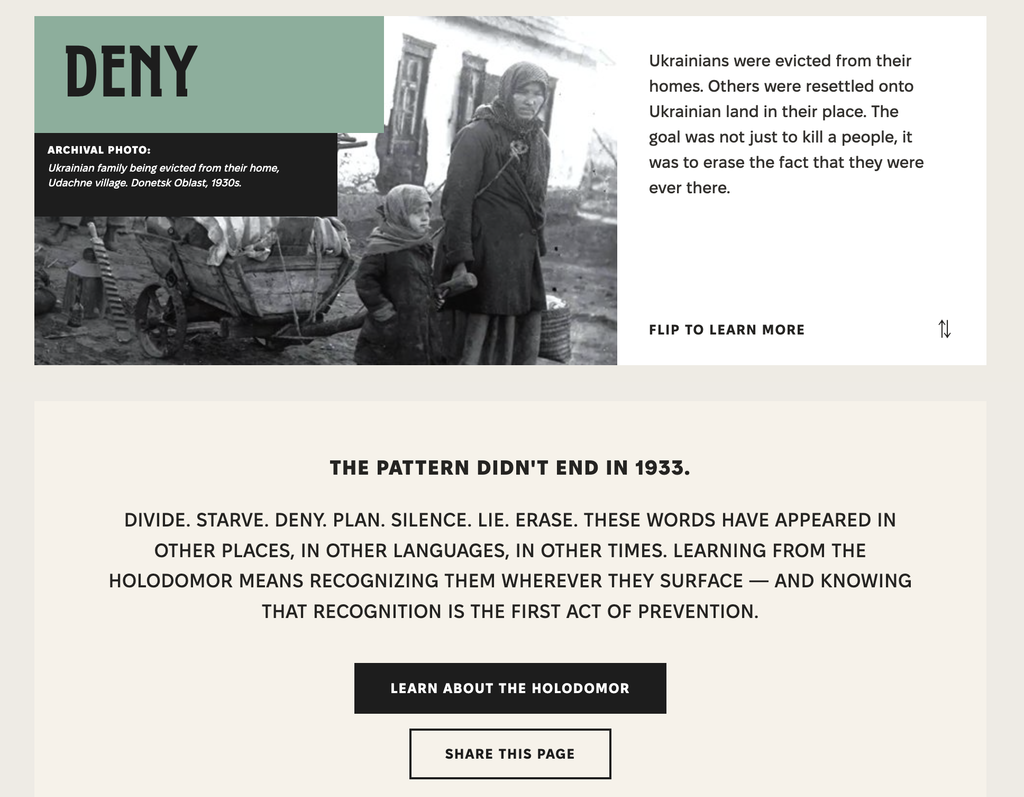
An example of an interactive card on the English-language information page of the Holodomor Museum’s media campaign (c) MixTape
Pressing the button turned the card over and revealed the answer to the question ‘What can you do?’: to help preserve cultural memory, protect religious diversity, recognise the use of hunger as a weapon, and oppose the forced displacement of people.
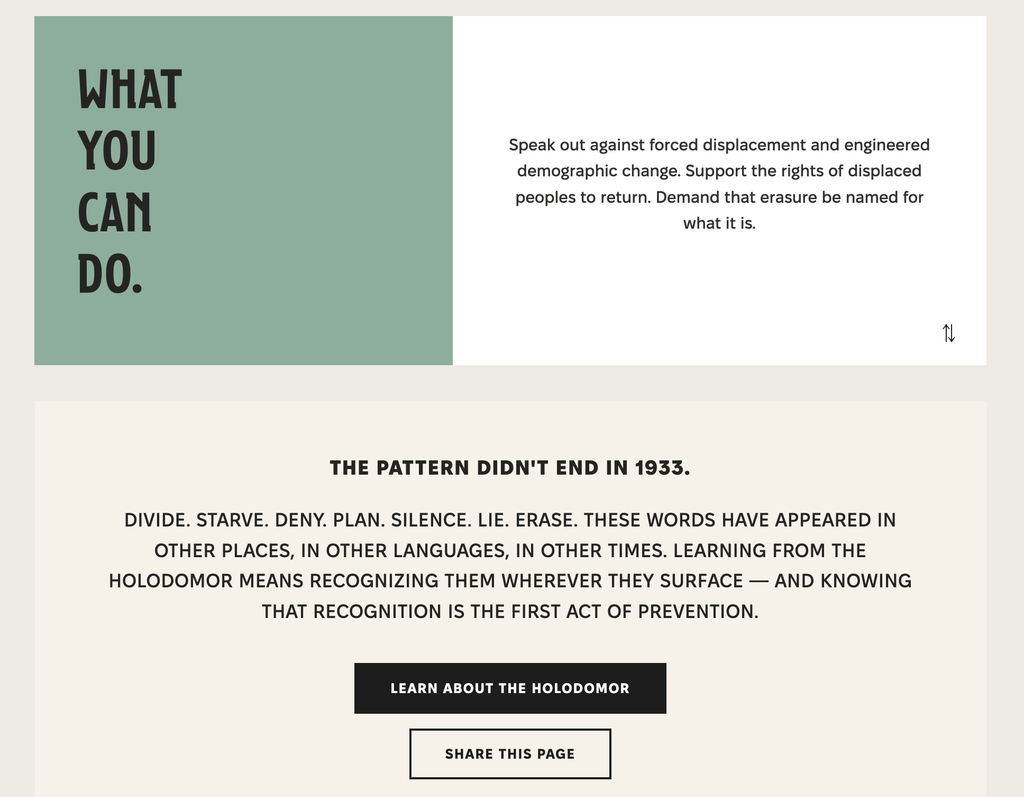
An example of an interactive card on the English-language information page of the Holodomor Museum’s media campaign (c) MixTape
Ukraine’s historical experiences are closely connected to modern issues related to the right to food, housing, culture, and personal identity. These themes are likely to resonate with and be understood by residents of the countries where the campaign materials have been distributed. Learn more about the history of the Holodomor by following the link to the website of the National Museum of the Holodomor-Genocide.
What we saw behind the figures
Over the course of four weeks, the campaign’s content received around 26 million views. The various language versions of the information page collectively recorded over 325,000 visitors. Almost 11,800 users opened at least one interactive card, and the link to the museum’s website was clicked 1,539 times.
The size of the audience and its subsequent actions could have produced a varied picture of the results. Kenya recorded the highest number of views of the content — 3.51 million. Meanwhile, Australia, which had the lowest number of visitors among the 13 countries, ranked fourth in terms of the number of clicks on the museum’s website — 117.
Lebanon attracted the largest audience — nearly 72,000 visitors to the information page. Of these, 6.5 per cent clicked on the cards on the page itself. This engagement rate with the campaign’s content was highest in Rwanda — 8.8 per cent, or almost one in eleven visitors.
For us, these figures have served as a guide for our future museum work. They have shown where we have succeeded in attracting a wider audience, and where visitors were more likely to take the next step in learning about the history of the Holodomor. It was precisely in terms of the second indicator that Brazil stood out — a country where digital communication will soon be complemented by a travelling exhibition from the National Museum of the Holodomor-Genocide.
Brazil: from digital engagement to an exhibition
In Brazil, the media campaign recorded over 31,000 visitors to the information page and 251 clicks on the link to the museum’s website. In terms of the number of visits to the Holodomor Museum’s website, the country ranked first in Latin America and second amongst all 13 countries. In terms of visitor numbers, these were recorded 1.7 times more frequently than the average. With a virtually identical audience for the page, Brazil generated approximately three times as many such clicks/visits to the website as Argentina. The fact that users turned specifically to the museum’s source was a distinctive feature of the Brazilian results.
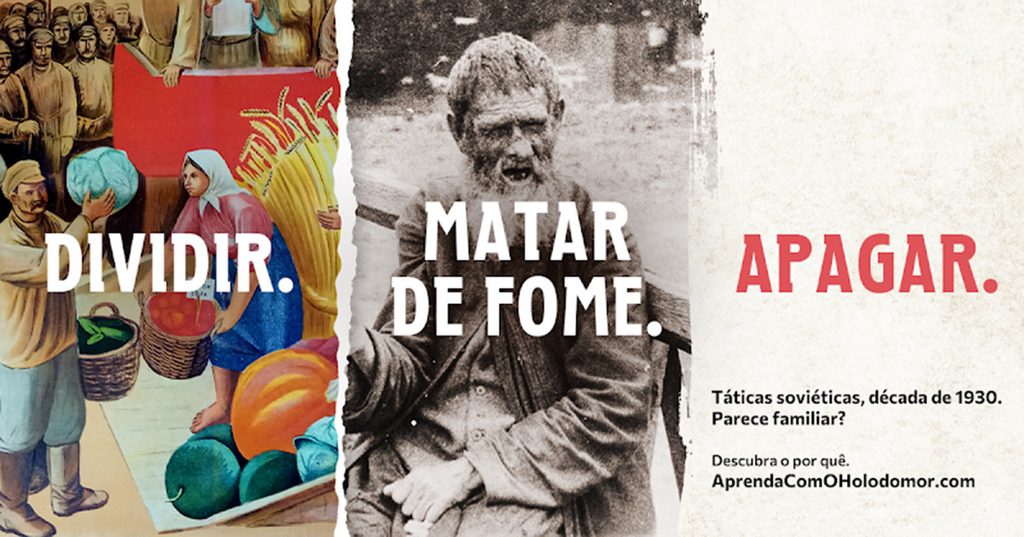
An example of static materials from the Holodomor Museum’s media campaign for countries in the Global South, in Portuguese. (c) MixTape
Museum work is usually a long-term endeavour: exhibitions, displays, books and research. A media campaign operates according to different principles: it does not replace academic work, but merely provides an initial, brief point of contact, after which people can move on and explore further. Thanks to the support of the Government of Canada as part of the ‘Support for the National Museum of the Holodomor-Genocide’ project, the Holodomor Museum will be able to take an important next step this year — to present the history of Ukraine to audiences in Brazil, one of the world’s largest countries.
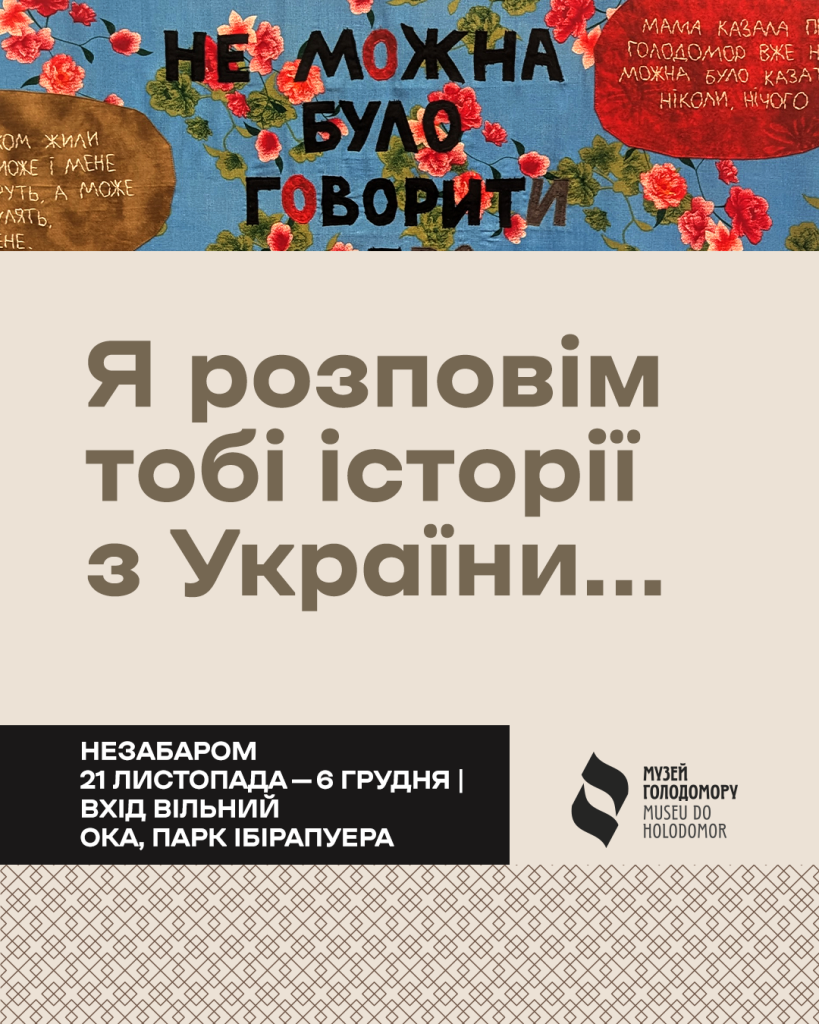
In just a few weeks’ time, the multimedia exhibition ‘I Will Tell You Stories from Ukraine…’ is set to open in São Paulo. Ukrainian exhibitions on this scale rarely reach countries in the Global South, so for us at the Holodomor Museum this is an important opportunity and a professional challenge: to find a way to engage with communities who, for various reasons, are less familiar with the Ukrainian context.
We have chosen to tell the story through personal accounts. In the video recordings, eyewitnesses to the Holodomor and museum staff address visitors directly, sharing their own experiences. This personal aspect also formed the basis for a series of textile collages by Oksana Briukhovetska, which will be on display in the exhibition. Here, art helps bring the Ukrainian experience closer to a new audience through images, emotions and individuals’ stories. We plan to present the project at other venues in Latin America, Africa and the Asia-Pacific region in the future.
By raising awareness of the Holodomor genocide, we preserve the truth about this crime and help the world to understand Ukraine better. The history of the Holodomor holds significance beyond our borders. It shows how the denial of access to food can become a tool of coercion and physical destruction of people. Knowledge of this history is essential to recognise the use of starvation as a weapon today and to act in time to prevent it. In this sense, knowledge must become a weapon — against silence, denial and the repetition of such crimes.
Authors: Mykhailo Kostiv, PhD in History, Head of the Research Department on Genocide, Crimes against Humanity and War Crimes, National Museum of the Holodomor-Genocide, and Olga Tsuprykova, Deputy Director-General for International Cooperation, National Museum of the Holodomor-Genocide
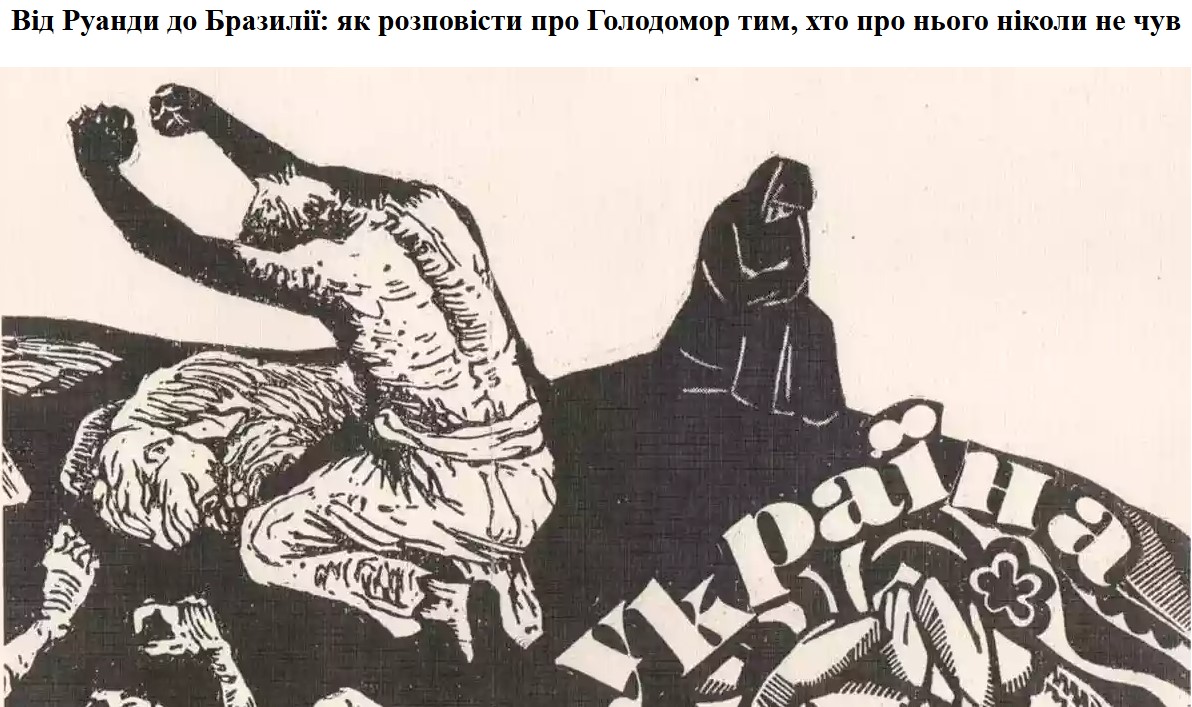
Illustration: Mykola Hnatchenko, 33rd
Source: Detector Media