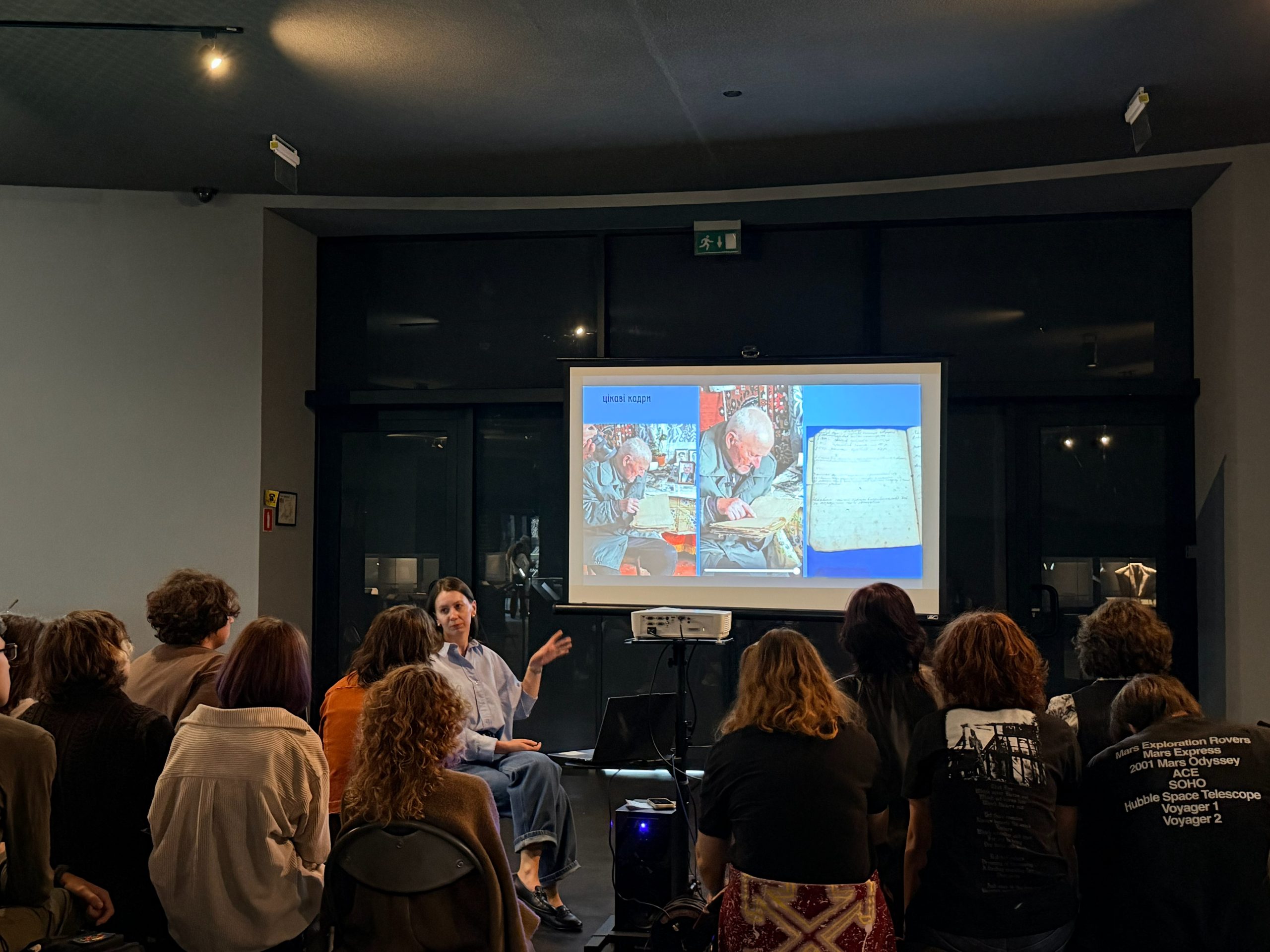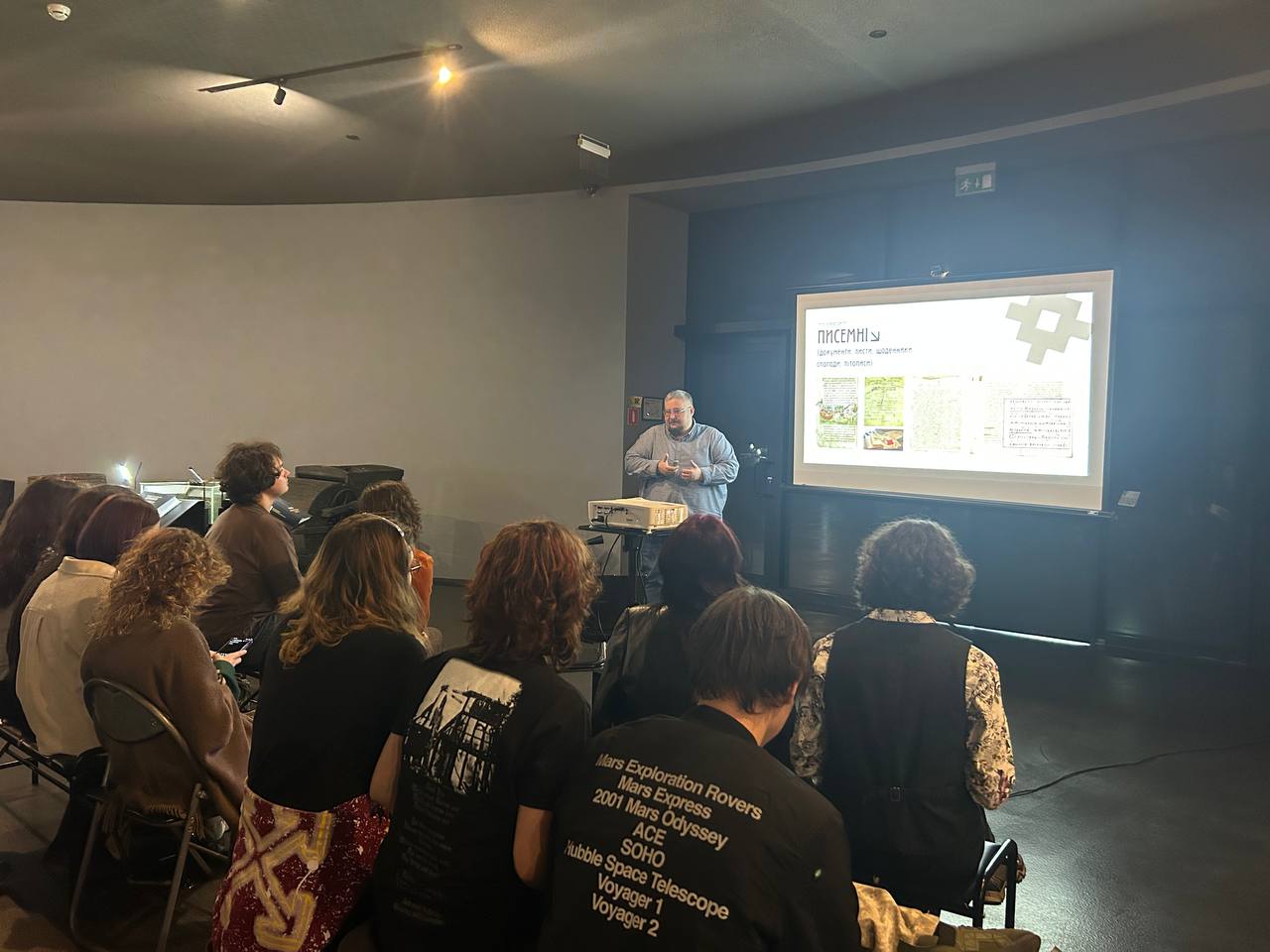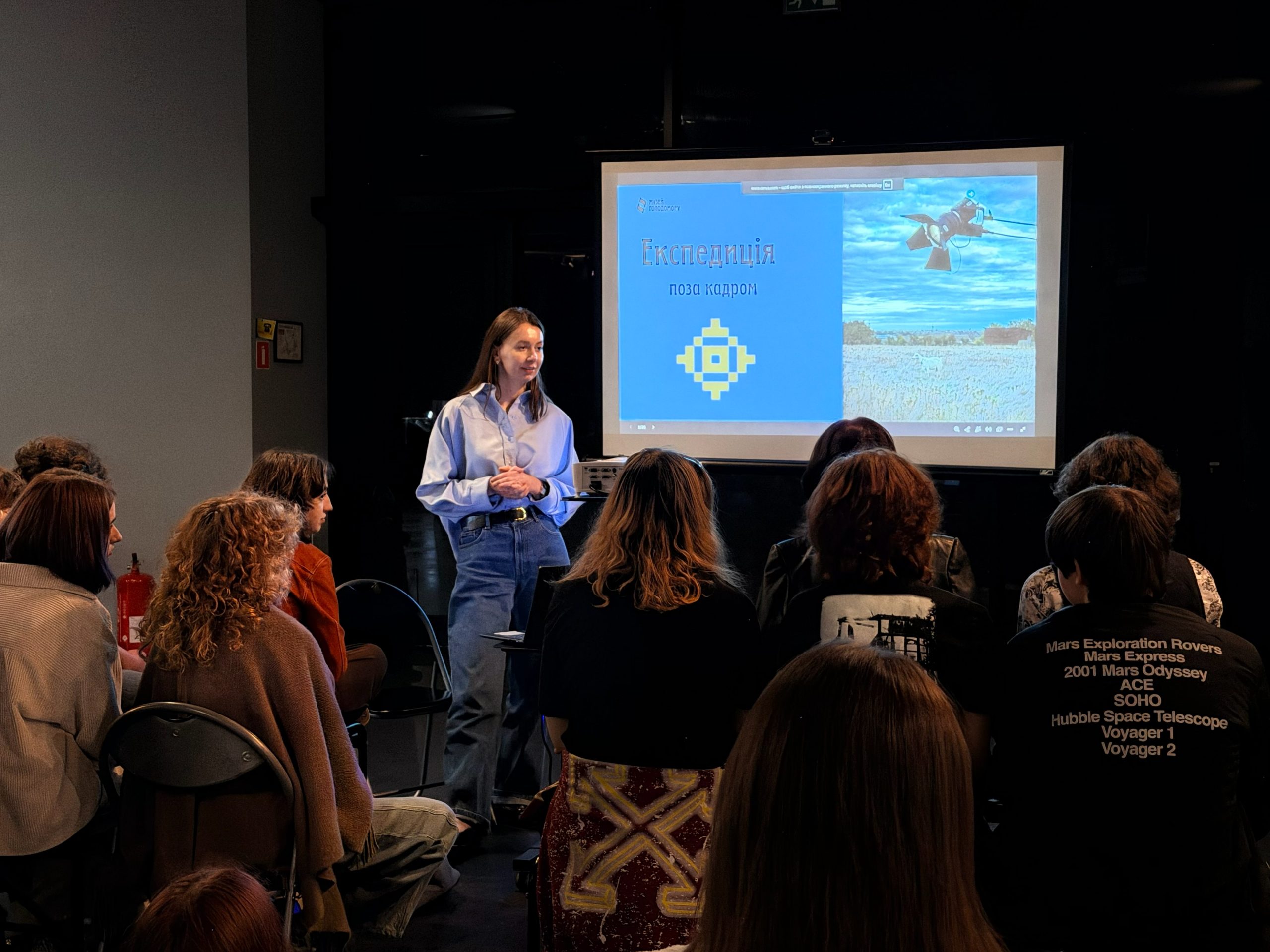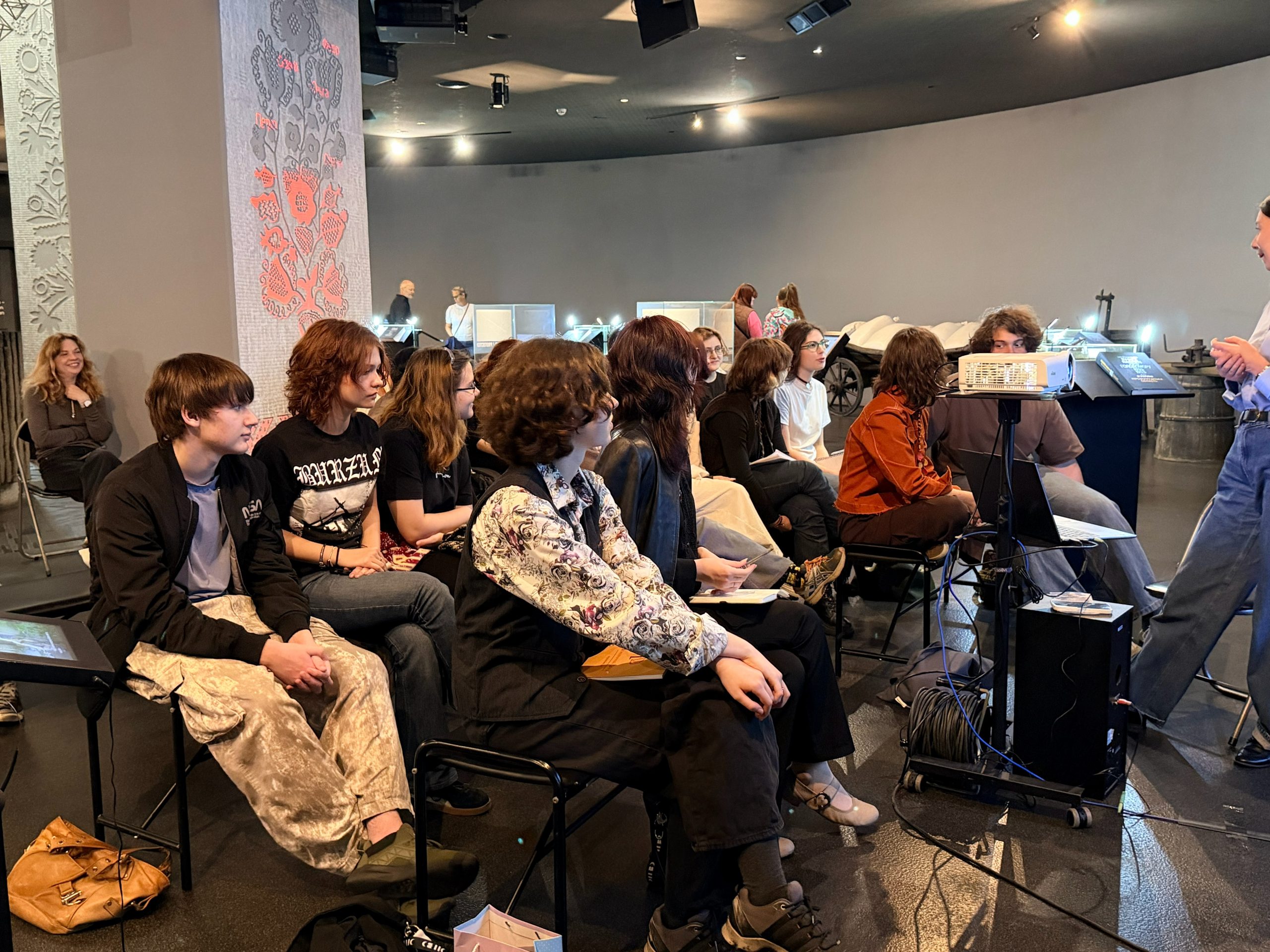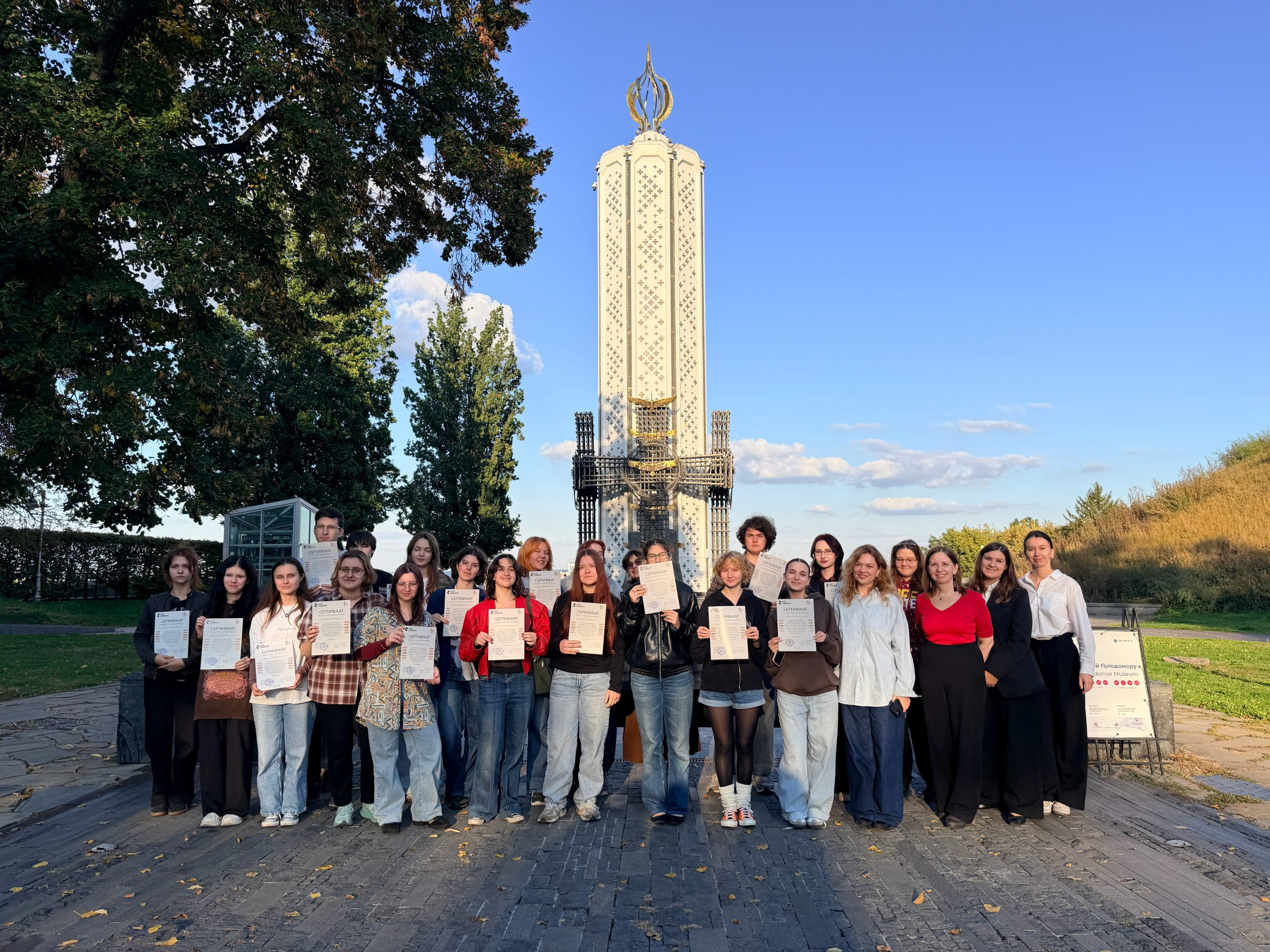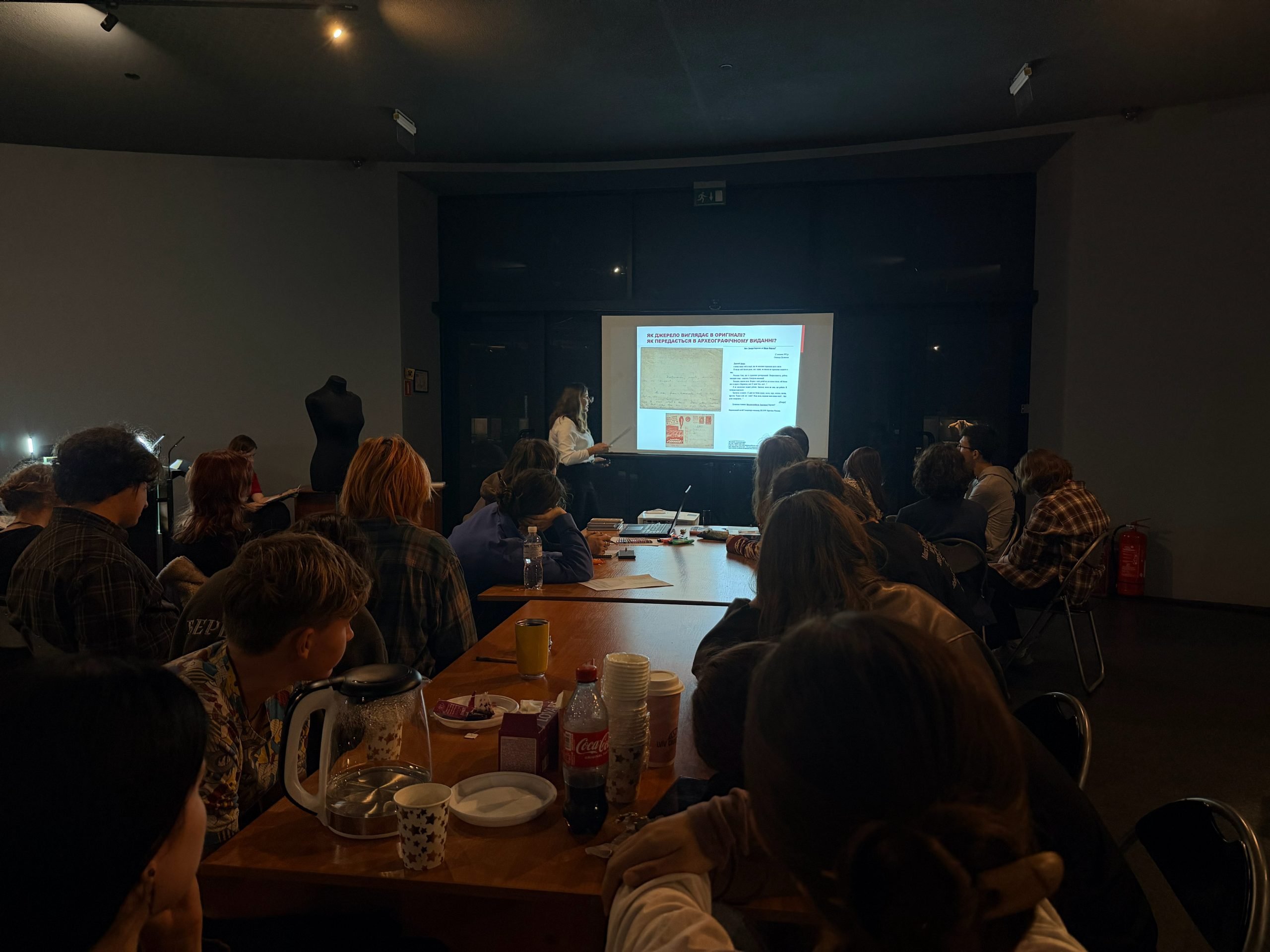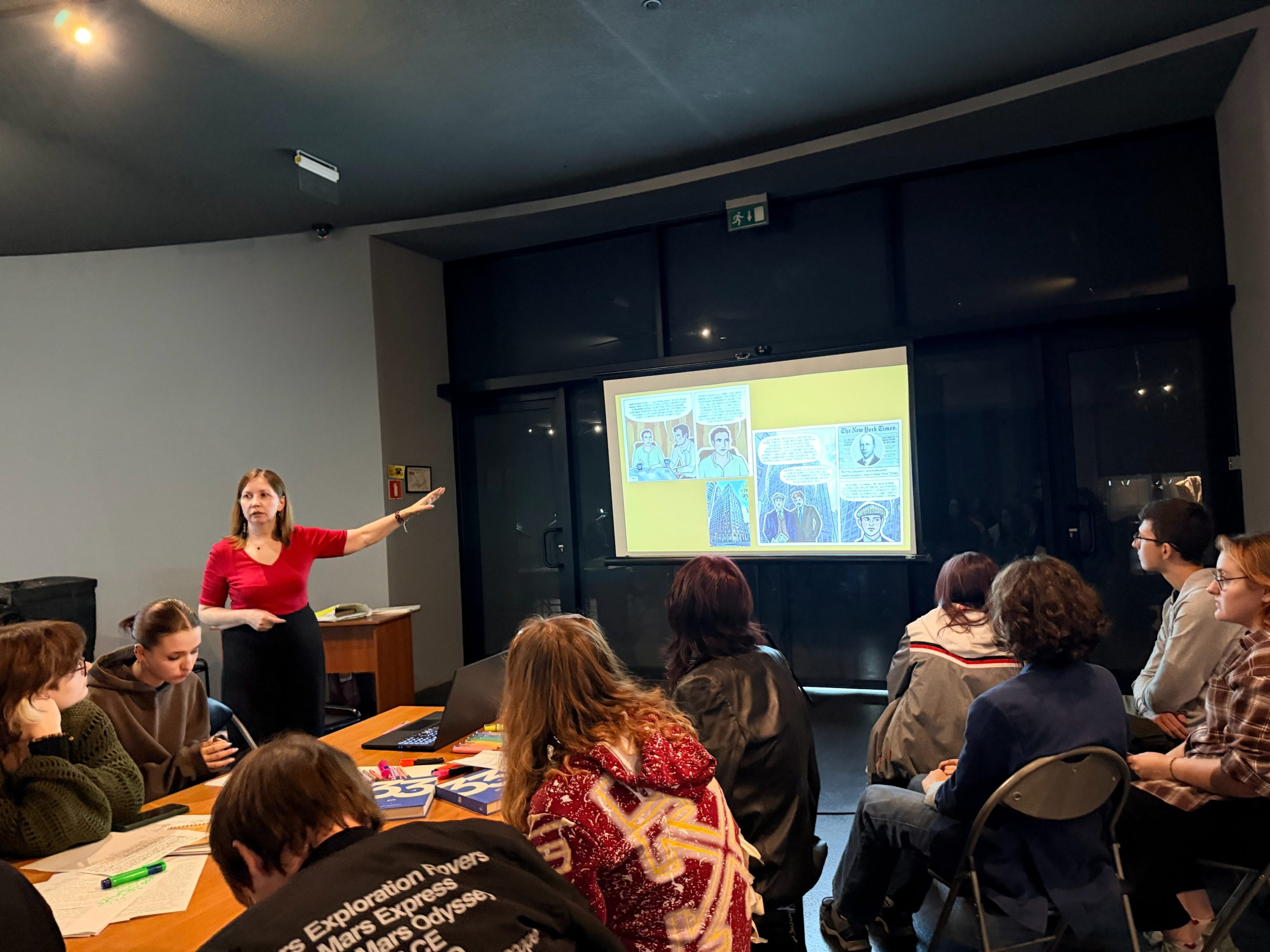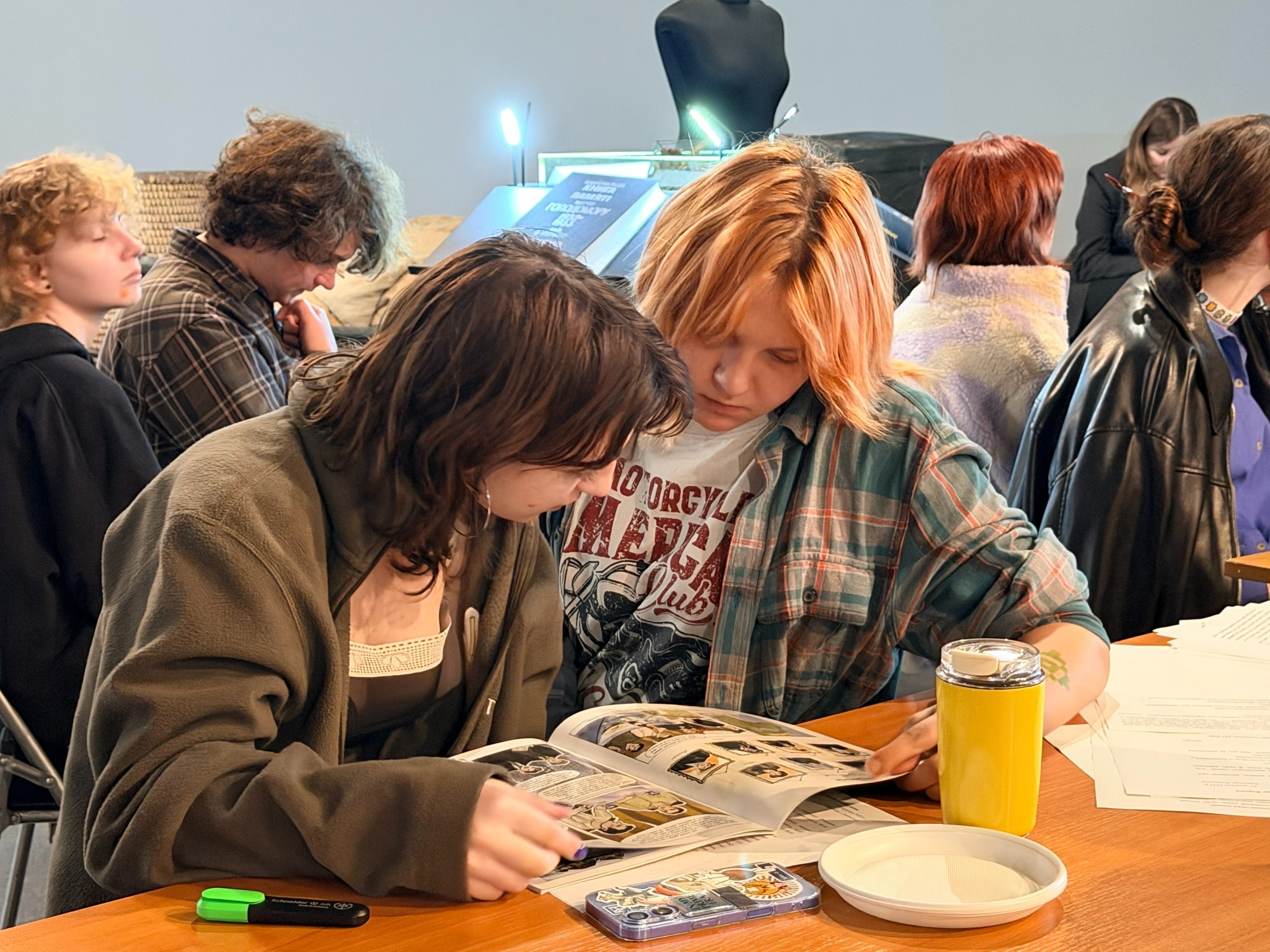

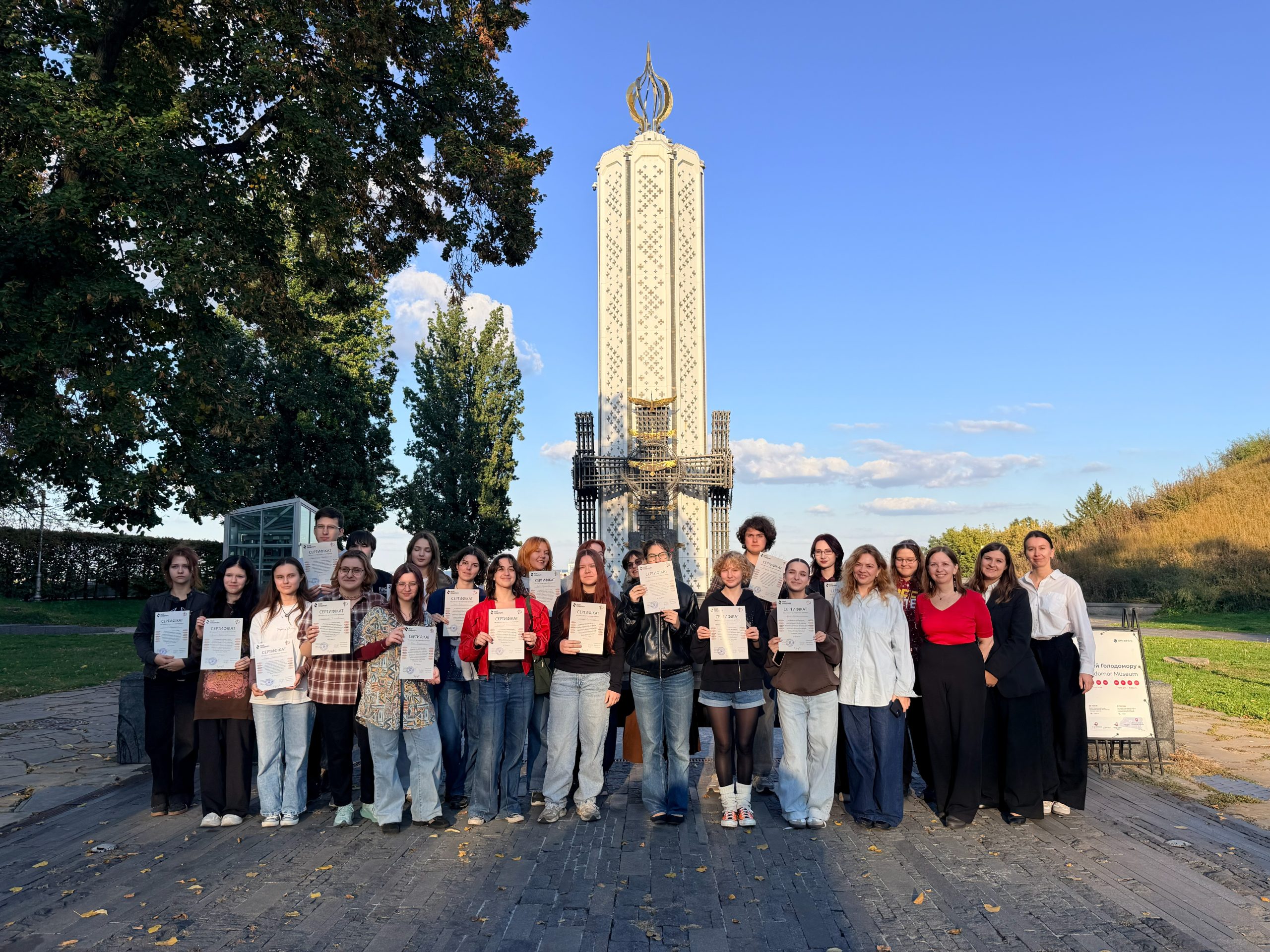
On 26–27 September, members of the ‘History Buzz’ community spent two productive days at the National Museum of the Holodomor-Genocide, learning about the museum’s work and the specifics of researching, preserving, and representing the past.
Andrii Kozytskyi, Senior Research Fellow, Genocide Research Department, spoke about historical practice, coming to terms with the past, and the importance of historical knowledge for understanding current processes. Participants discussed how studying history helps identify mechanisms of manipulation and engage critically with historical narratives.
Andrii Kozytskyi explained: “The denial of the Holodomor in modern Russia has complex causes and serves several domestic and foreign policy objectives. For the Russian authorities, manipulating public perceptions of the past is an important means of psychologically mobilising supporters of President Vladimir Putin’s anti-Western political course (Russian propaganda claims that the Holodomor was ‘invented’ outside Ukraine and ‘imported’ into the Ukrainian collective consciousness following the collapse of the USSR). However, beyond this, the deliberate distortion of the history of the Holodomor serves as one of the tools in the information war that the Russian Federation is waging against Ukraine. There is every reason to believe that, for Russians, denying the Holodomor is a crucial element in reinterpreting their own past and an integral part of a new canon of collective historical memory. I hope that the historical workshop held at the National Museum of the Holodomor-Genocide will make a significant contribution to the spiritual development of the young people who visited our institution. Virtually everything that surrounds our young people today, from the cultural identity of our country to the war with Russia, has its roots in the past. Learning about the history of their people, and the tactics that Moscow has used in the past and continues to use today in its struggle against Ukrainians, will help young people answer the question of who they are and who they should become in the Ukraine of the future.“
Roman Moldavskyi, Senior Research Fellow at the Holodomor Oral History Department, shared with participants how to work with eyewitness accounts, from identifying interviewees and preparing for interviews to transcribing, preserving, and publishing oral stories.
Roman Moldavskyi noted: “Participants learnt how the museum finds people who survived the Holodomor and works with communities and witnesses’ families; how interviews are prepared and the principles behind the formulation of questions; why it is important not to impose one’s own judgements or answers on the interviewee during a conversation; what happens to the recording after the conversation ends, from preservation and transcription to description, cataloguing, and publication; and how oral testimony is transformed into a historical source accessible to researchers and visitors. A significant part of the session involved watching and discussing excerpts from real interviews with Holodomor witnesses. During the discussion, participants focused on both the content of the accounts and the peculiarities of human memory: pauses, emotions, repetitions, difficulties in recall, and how personal experience helps us view historical events through the lens of a specific individual’s life story. The witness’s testimony is not merely a story about the past. It is a historical source that requires careful examination, critical analysis, and comparison with other sources whilst at the same time being carefully preserved as a unique human experience.”
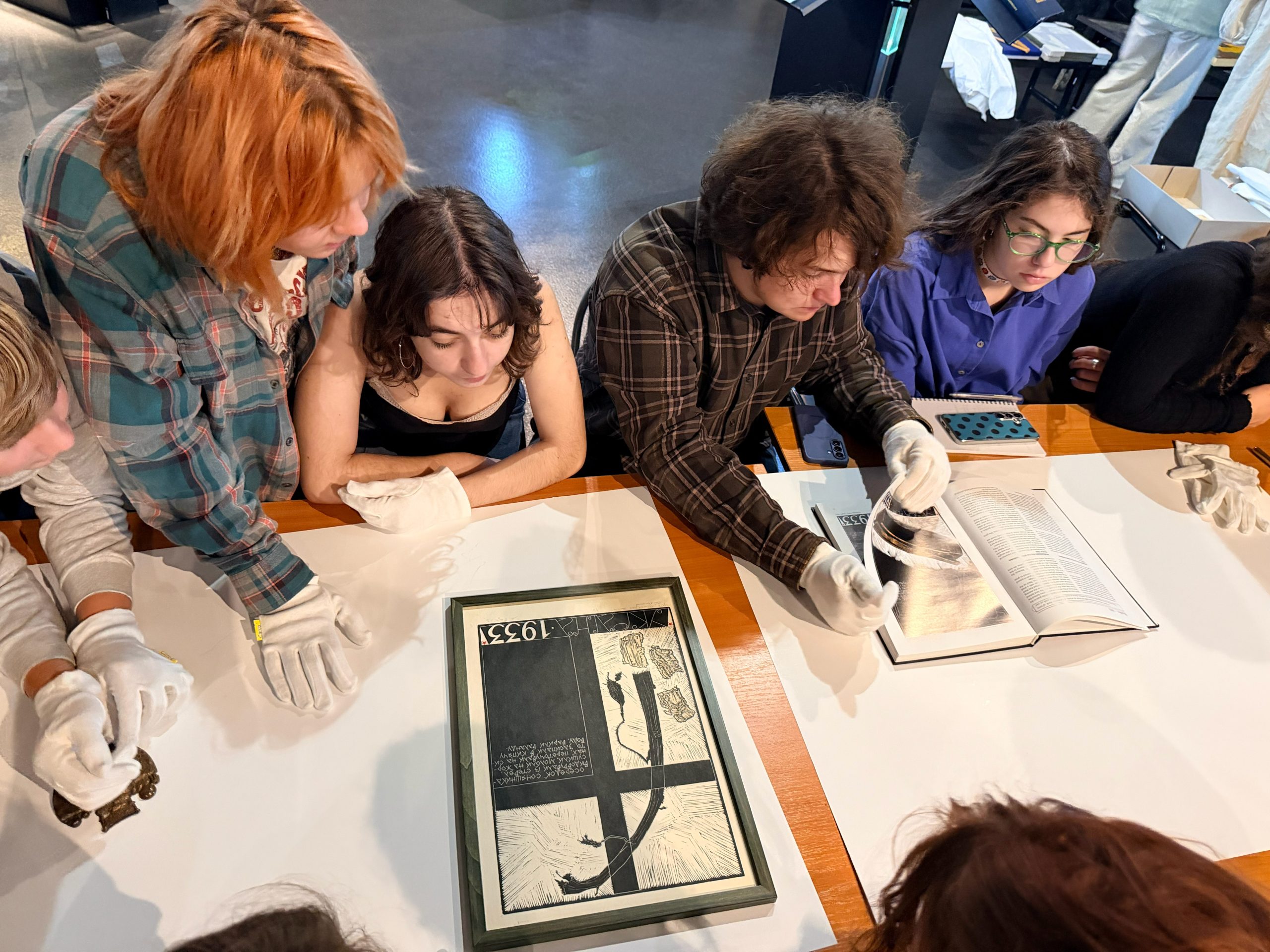
Maryna Pryn, the head curator, spoke about the development of the museum’s collection, the storage, restoration, and digitisation of museum artefacts. Participants could personally experience history by examining the museum artefacts and attempting to produce a scholarly description of them.
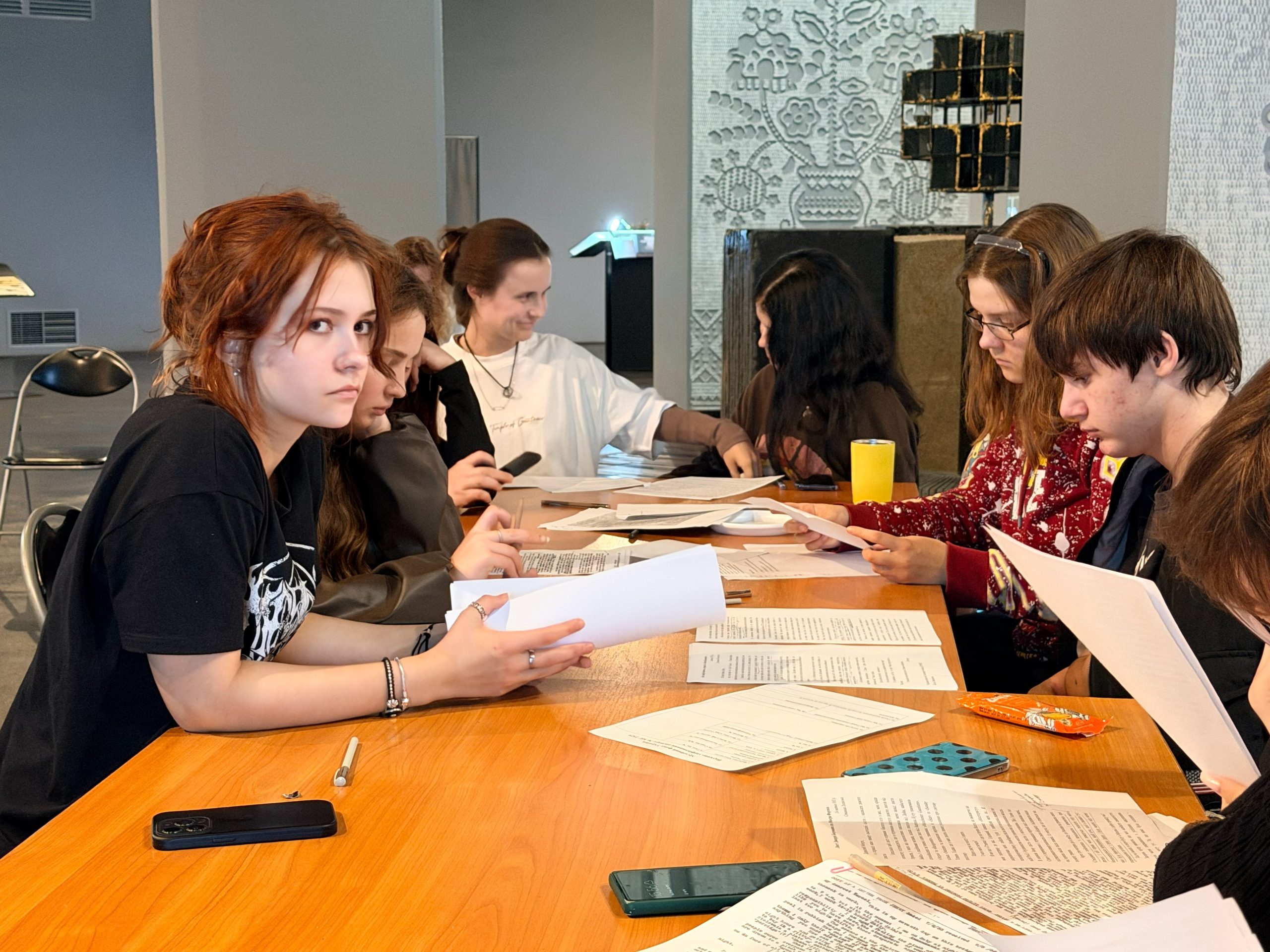
During the workshop, Kateryna Lukianets, head of the Research Department on the Holodomor and Mass Man-Made Famines, demonstrated how researchers work with documents and prepare the correspondence of Jerry Berman, a witness to the Holodomor in the Luhansk region, for publication. Participants learned about the various stages involved in working on a book. They became familiar with the details of processing archival letters and creating a scholarly reference framework. They explored the importance of the author’s identity when dealing with personal sources and examined the complexities of contextualizing events and verifying testimonials. The researchers demonstrated how they utilised documents from Ukraine’s central state archives, periodicals from 1932-1933, maps, and photographic sources. They also explained their collaboration with Jerry Berman’s descendants and individuals from his circle.
Senior Research Fellow Halyna Holubieva introduced the audience to the history behind the creation of the illustrated book “Letters from the Attic.” Afterwards, participants in the historical workshop had the opportunity to step into the researchers’ shoes, searching for and analysing information from Jerry Berman’s letters. Also, they discussed public history, for which the museum space is one of the main platforms today.
Yana Horodniak, head of the excursion and education department, spoke about the museum’s work with different audiences and its educational programmes. She also led a guided tour of the museum grounds and the Hall of Memory, during which the young people learnt more about the museum’s exhibits and their true significance. After all, behind every object lies not just a story, but the story of a particular family’s survival during the Holodomor.
Additionally, the participants were given a glimpse ‘behind the scenes’ of the museum’s field expeditions, accompanied by Olha Vyhodovanets, Deputy Head of the Excursion and Education Department: they learnt about fieldwork, the hundreds of kilometres travelled, unforeseen situations, and encounters with people whose testimonies help to keep the memory of the past alive.
These two days provided an opportunity not only to learn more about the museum’s work, but also to try their hand at being researchers, working with primary sources, museum artefacts and oral testimonies.
We express our sincere thanks to Mariia Vorotylo, the founder and driving force behind ‘History Buzz’, for the idea behind this workshop; to the community members for their genuine interest in history and active participation; and to our museum staff for their willingness to share their knowledge, experience, and ability to inspire others with their passion for their work.