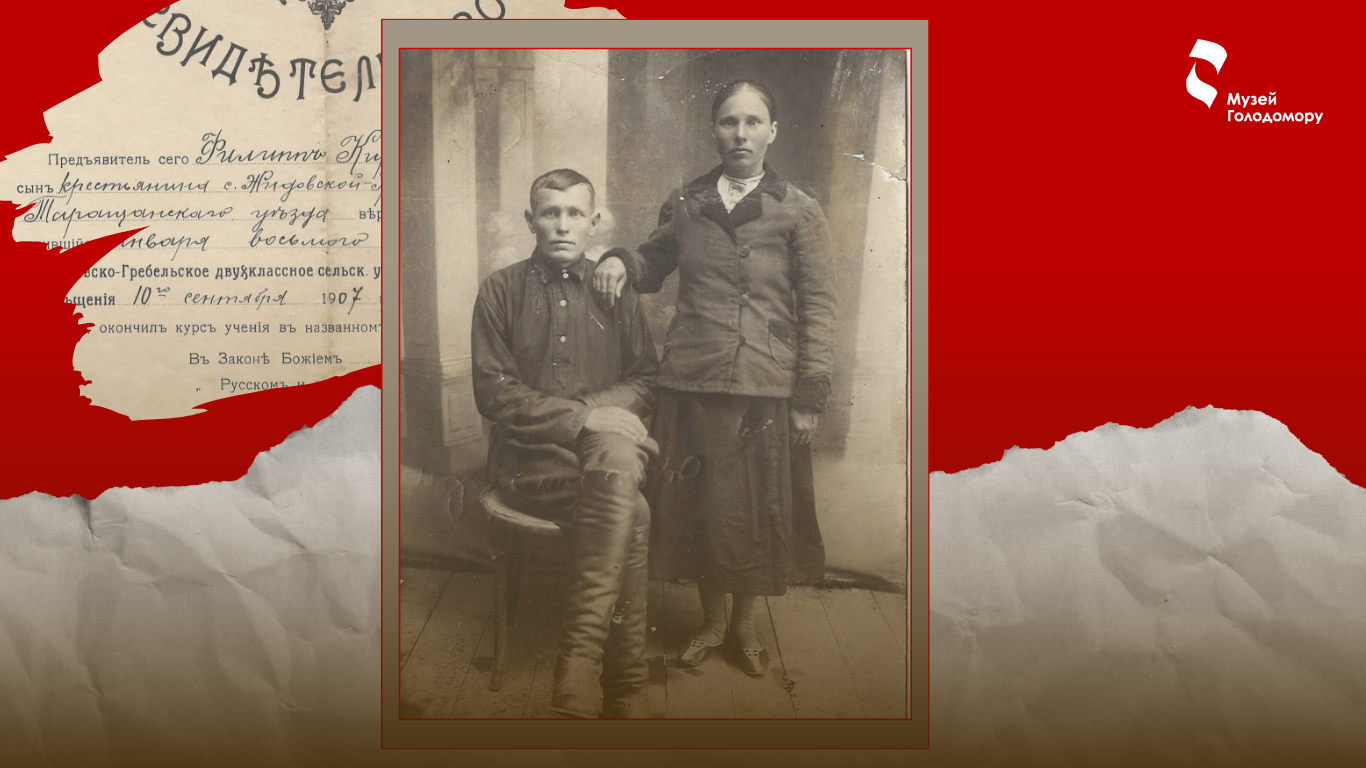
The museum received a recording of memories about the Holodomor, made in 1976
“It was a hungry year; I almost died. And my wife almost died too. I had malaria, which meant my stomach was completely ruined. I was dying. And I told my wife, ‘I’m going to the hospital, maybe I know someone there, maybe they’ll give me some bread.’ I went to the hospital. And I started telling them. And they said: ‘Datsenko, Ivan Lakhman and Serhii Korobko are coming. They’re putting living people on a cart from the hospital and taking them away together…’ ‘So,’ they said, ‘if you stay here, they’ll put you on the cart and take you away. Go home and die around your children.’ I’m leaving. And one man is walking along. He says, ‘What’s wrong with you?’ ‘This and that, I’m walking to my death.’ And he says, ‘Listen, run and get Mokryna to get some buckwheat husks, grind them in a millstone, and bake a pancake. And you will eat that pancake…’ So I went to the foreman’s wife. She found all that. And as soon as I ate it, it immediately became better, right away!” That was the conversation between Pylyp Kyrylovych Datsenko, born in 1899, and his son about 1933.
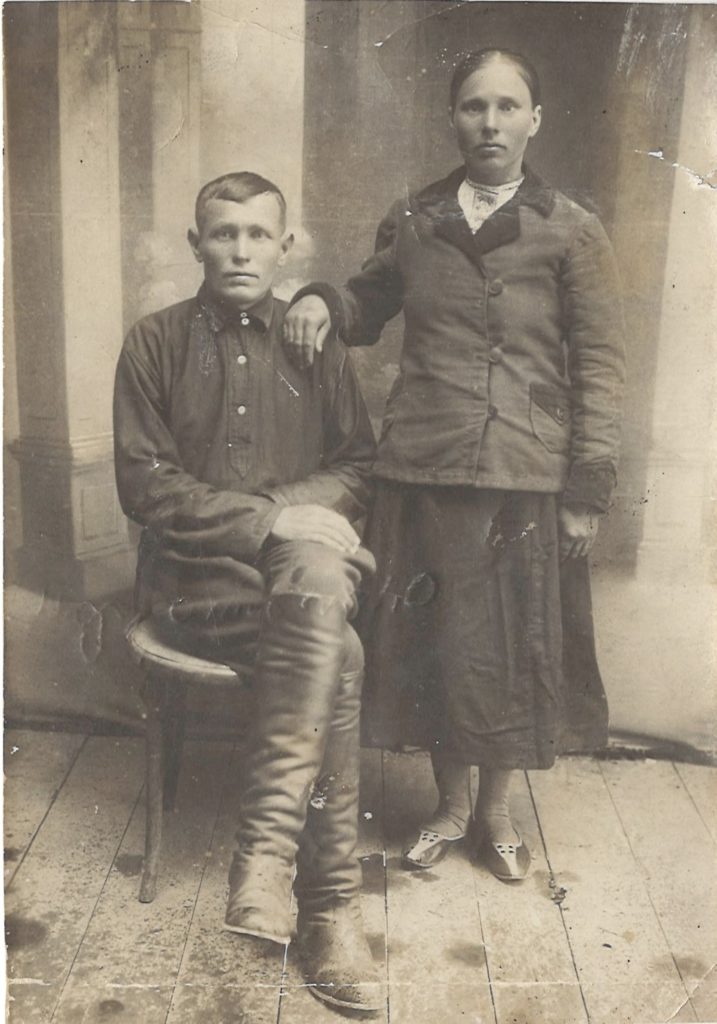
Pylyp Kyrylovych Datsenko with his wife Lukiia Yosypivna. 1935.
Pylyp Kyrylovych was born on 8 January 1899 in the village of Zhydivska Hreblya, Tarashcha Raion (now the village of Kalynove, Bila Tserkva district), Kyiv region. He was educated and worked as an accountant at the local collective farm ‘Bolshevik,’ recording workdays, then became a foreman and deputy head of the collective farm.
The village had an extremely high mortality rate during the Holodomor, with 1,898 deaths recorded. There are three mass burial sites: in the Haidamakivka neighbourhood, in Korovyntsi, and in Staryntsi.
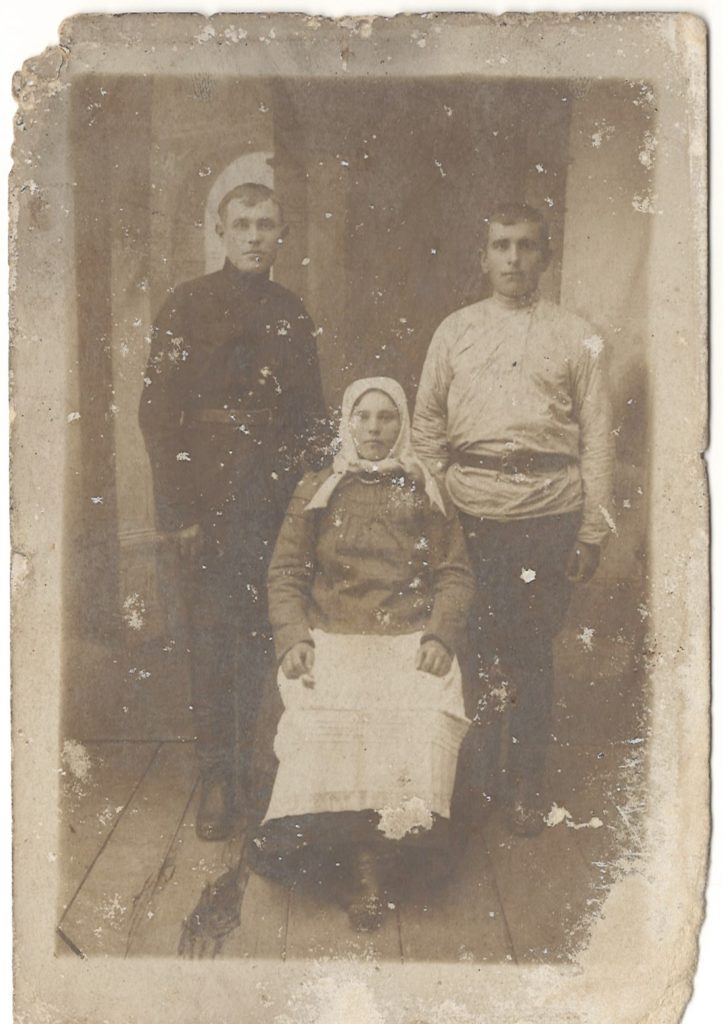
In the centre of the photo is Lukiia Yosypivna Datsenko, born in 1905 with Pylyp Kyrylovych Datsenko standing on the left. On the right is her younger brother, Semen Kyrylovych Datsenko, born in 1901. 1924.
The audio recording of the conversation with the Holodomor witness is rare and valuable, as it was made back in 1976. Liudmyla Sydorenko, the witness’s granddaughter, donated the item to the museum’s collection, along with copies of family photographs and documents. We sincerely thank Ms Liudmyla for preserving her family history and donating these family heirlooms to us.
If you have any records or items that tell the story of the Holodomor in your family, please email us at [email protected]. Each such artefact is priceless and must survive.