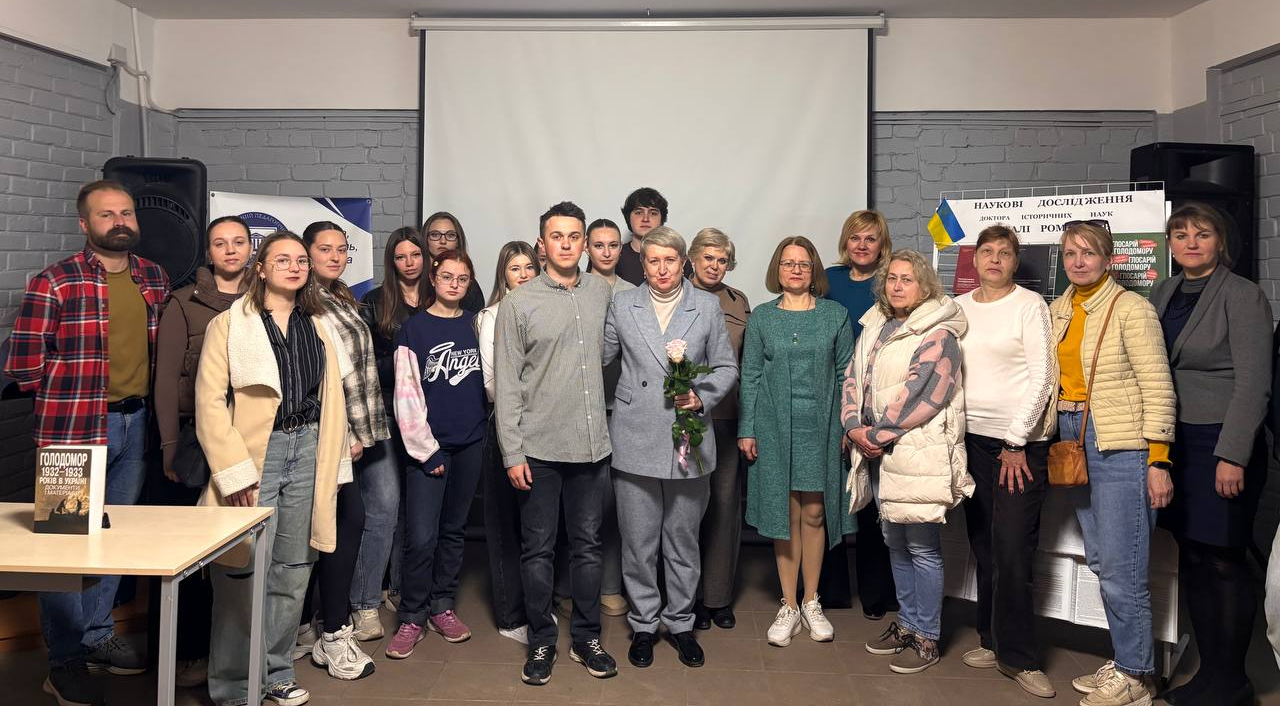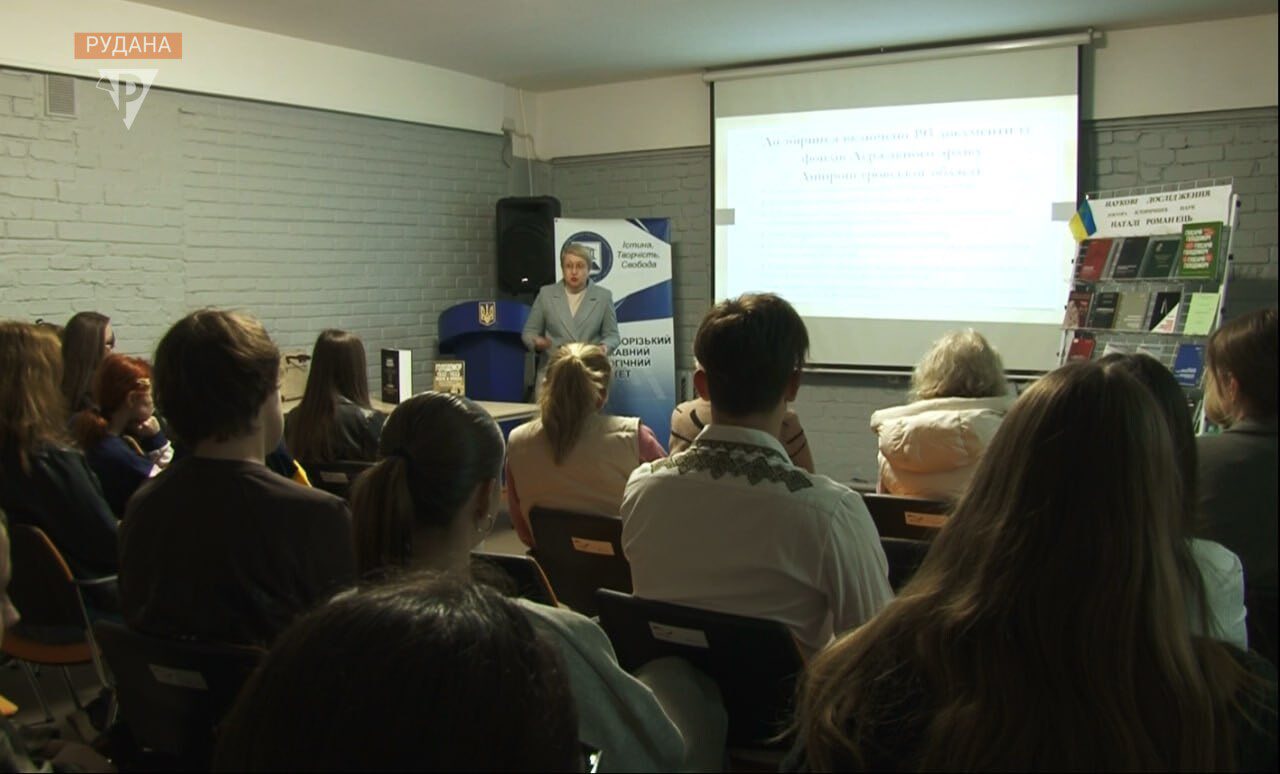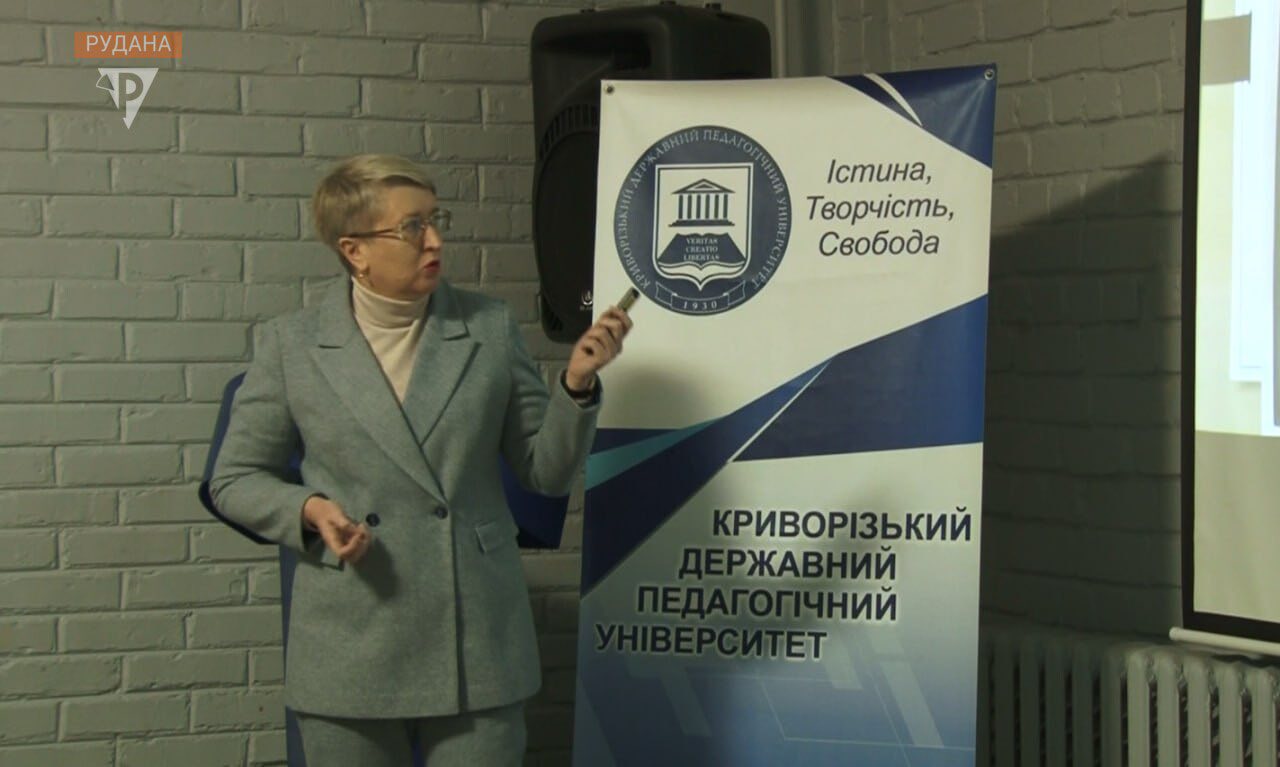
Natalia Romanets presented her book at Kryvyi Rih Pedagogical University
On 16 April, a presentation of the book ‘The Preconditions of the Holodomor: Collectivisation and Dekulakization in the Dnipropetrovsk Region (December 1929 – September 1931)’, prepared by Dr Natalia Romanets, a senior researcher at the National Museum of the Holodomor-Genocide and Doctor of Historical Sciences.
The collection contains 160 documents that Ms Romanets found in the archives. Some of the materials were classified and have been published for the first time.
The researcher has long been studying the regional aspect of the Holodomor-genocide tragedy, specifically in the Dnipropetrovsk region. In 2021, the National Museum of the Holodomor-Genocide published a collection of documents entitled ‘The Holodomor-Genocide of 1932–1933 in the Dnipropetrovsk Region: Scale and Consequences’. In 2023, the historian’s new work was published: “Mechanisms of the Holodomor: Grain Procurement Campaigns of 1931–1933 in the Dnipropetrovsk Region // Collection of Documents and Materials”. This time, the researcher’s focus is on the events that preceded the tragedy of the Holodomor.
“It is no coincidence that the collection bears this title. It covers the period from December 1929 to September 1931. Indeed, it was the wholesale collectivisation and ‘dekulakisation’ that laid the foundations for the Holodomor. It was precisely because of this that there was a total disorganisation of agriculture, and hundreds of highly productive peasant farms belonging to the so-called ‘kulaks’ were destroyed, with the kulaks themselves subsequently deported to the north of Russia,” the author of the book emphasises.
She says that the Kryvyi Rih district was unique in this respect, being the first in the Ukrainian SSR where mass dekulakization began, even before the adoption of the famous resolution of the Central Committee of the All-Union Communist Party (Bolsheviks) of 30 January 1930, ‘On measures for the liquidation of kulak farms in areas of total collectivisation’.
For instance, in the Kryvyi Rih district, which had been designated a district of total collectivisation, 4,081 peasant farms were dekulakised over the course of a few days at the end of January, amounting to 3.7% of the district’s total number of farms. The punishment actions were conducted at a very rapid pace. Thus, in the Dolynskyi district, the ‘expropriation of peasant farms’ was conducted in just a single day: the dekulakization of the peasants began at one o’clock in the morning and finished by noon.
The result of the wholesale collectivisation, conducted by the authorities from December 1929 to August 1931 in the Dnipropetrovsk region, was the destruction and disorganisation of agricultural production, which had been established over many years. As Natalia Romanets emphasises, the grain procurement campaigns of 1931–1933 occurred in an agricultural sector that had been ‘literally destroyed by collectivisation.’ The confiscation of grain under these conditions became a direct precursor to the Holodomor.
As a reminder, the book “Preconditions of the Holodomor: Collectivisation and Dekulakisation in the Dnipropetrovsk Region (December 1929 – September 1931)” is available for purchase at the museum ticket office. If you are from another city, please email us at [email protected] to receive payment details.
You can also watch the report by TRK Rudana Kryvyi Rih on the presentation.
Photos from the Facebook page of KDPU and the “Rudana” TV and Radio Company, Kryvyi Rih.