At a symposium in Canada, researchers from various countries discussed new approaches to studying the Holodomor
At a symposium in Canada, researchers from various countries discussed new approaches to studying the Holodomor.
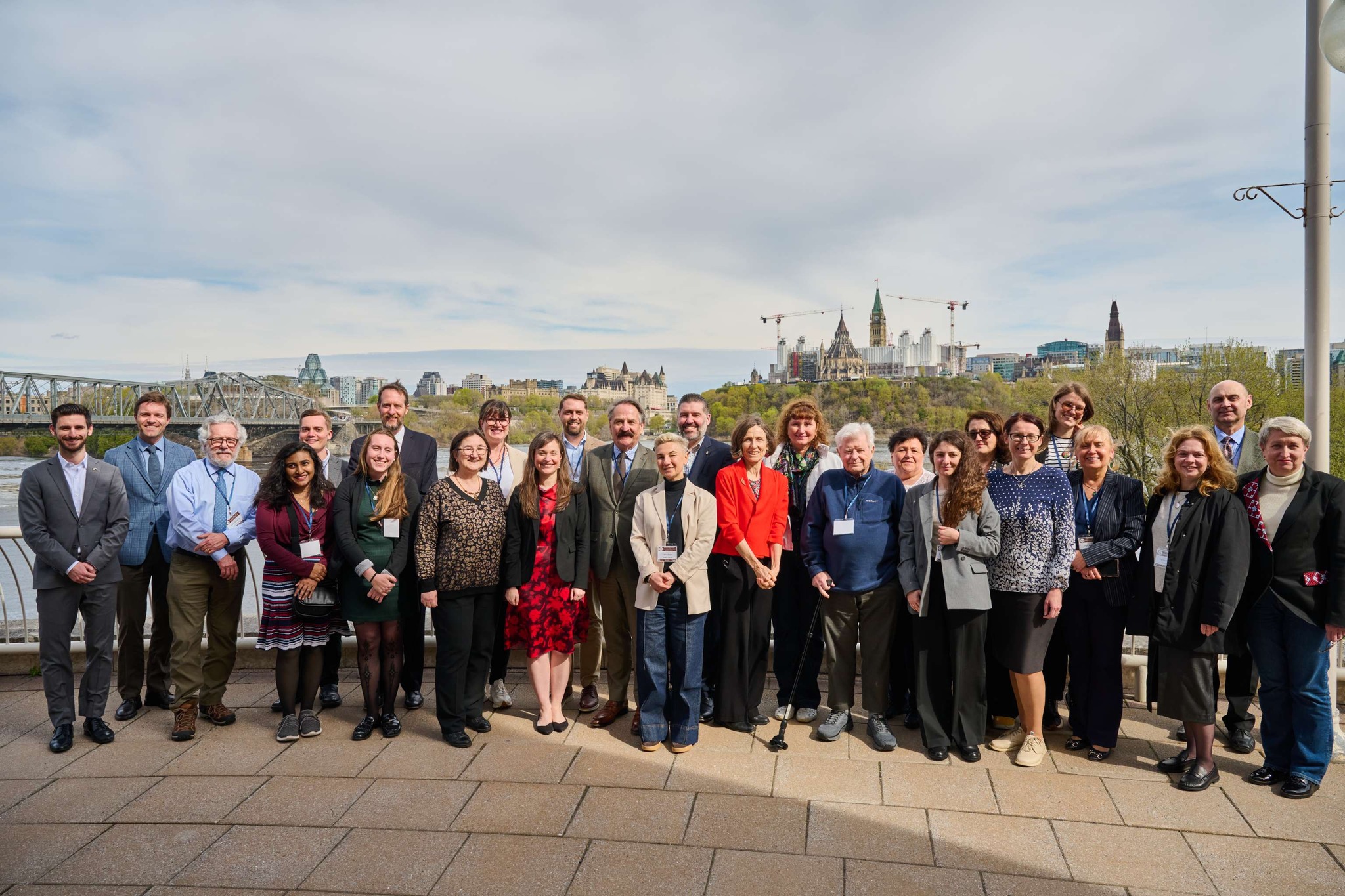
Canada hosted an international symposium entitled ‘The Legacy of the Holodomor.’ During the event, they discussed recent historical research on the subject. The event took place as part of the project “Support for Exhibitions at the National Museum of the Holodomor-Genocide in Ukraine,” funded by the Canadian Ministry of Foreign Affairs and implemented by Cowater International in partnership with the Canada-Ukraine Foundation.
“The main aim of this symposium is to bring together researchers from various countries, including Ukraine, to discuss new approaches to the study of the 1932–1933 Holodomor. During the two-day event, a very wide range of topics was discussed: from demographic studies and diplomatic documents to the impact of the Holodomor on various ethnic communities in Ukraine and contemporary Russian disinformation,” said the Chair of the symposium’s evaluation panel, Professor Liubomyr Lutsiuk, Senior Research Fellow at the Department of Ukrainian Studies at the University of Toronto, as quoted by Ukrinform.
He said that the symposium had demonstrated the interest of a new generation of academics in the subject of the Holodomor.
Sixty abstracts were submitted for consideration by the expert panel, which included Hanna Sokyrina, Deputy Director General of the National Museum of the Holodomor Genocide. Eighteen of these were selected by open vote as being capable of deepening understanding of the Holodomor, and their authors were invited to participate in the event. Over the course of two days, researchers from Ukraine, Canada, the USA, the UK, Bulgaria, Romania and Turkey presented their projects and also acted as panellists and panel chairs. Some of the projects presented will receive funding for their further implementation. Dr Natalia Romanets, a researcher at the Holodomor Museum and Doctor of Historical Sciences, also submitted her own project for consideration by the committee. Her research focuses on women’s resistance during the Holodomor.
“What is particularly important to me is that a new generation of scholars is now addressing this topic. In my youth, the very existence of the Holodomor was denied; now, however, young researchers from Ukraine, the US, Turkey, Bulgaria and other countries are analysing it as genocide and attempting to understand it within a broader historical context,” noted Professor Lutsiuk.
He emphasised that ‘international academic cooperation is already taking shape among these young people’.
“This means that research into the Holodomor is progressing and reaching a new level,” Mr Lutsiuk stated.
Photo: Cowater International.