The 100th anniversary of artist Opanas Zalyvakha’s birth
November 26, marks the 100th anniversary of the birth of Opanas Zalyvaha, a Ukrainian artist of the 1960s, dissident, and one of the symbols of cultural resistance to the Soviet regime.
“Opanas Zalyvakha was born in the village of Husynka in the Kupiansk district of Kharkiv region. His father survived the 1932–33 Holodomor. At the time, he was in the second year of primary school and witnessed people exhausted by hunger dying; they were taken to a ravine and buried without a coffin, a cross or a funeral service. At night, little Opanas, together with his elder brothers Vasyl and Mykola, would go to the collective farm fields to gather a few ears of grain so that their mother could bake small flatbreads. They were most afraid of the patrolman, as one could be shot or imprisoned for five ears of grain. Their grandfather managed to save the family: he made a beehive for the head of the collective farm, and they were allowed to leave Ukraine. They went to the Far East,” Zalyvakha’s daughter, Yaryna Zalyvakha, tells the Halychyna newspaper.
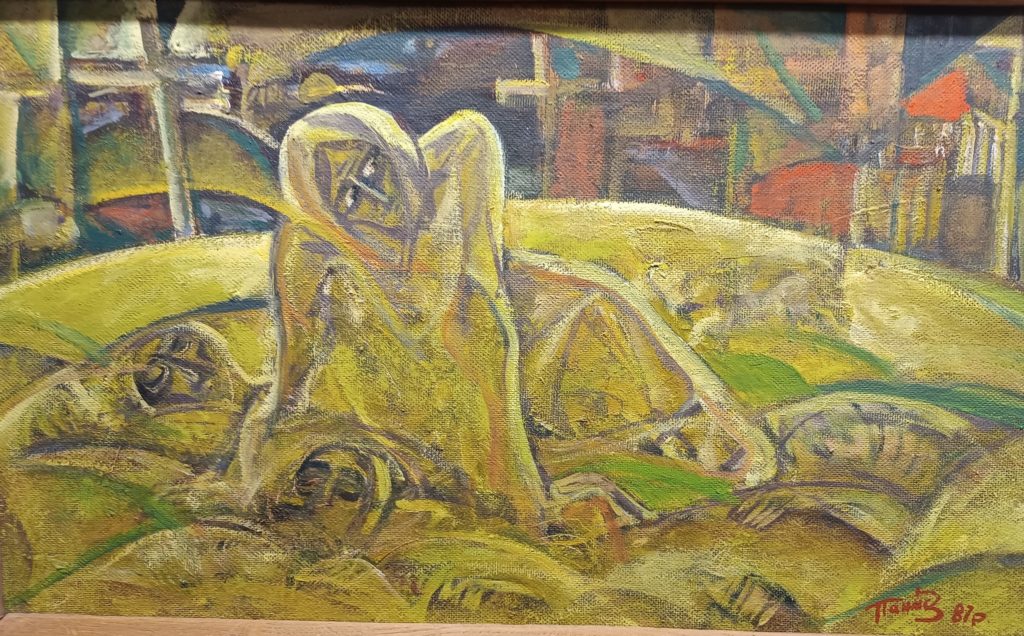
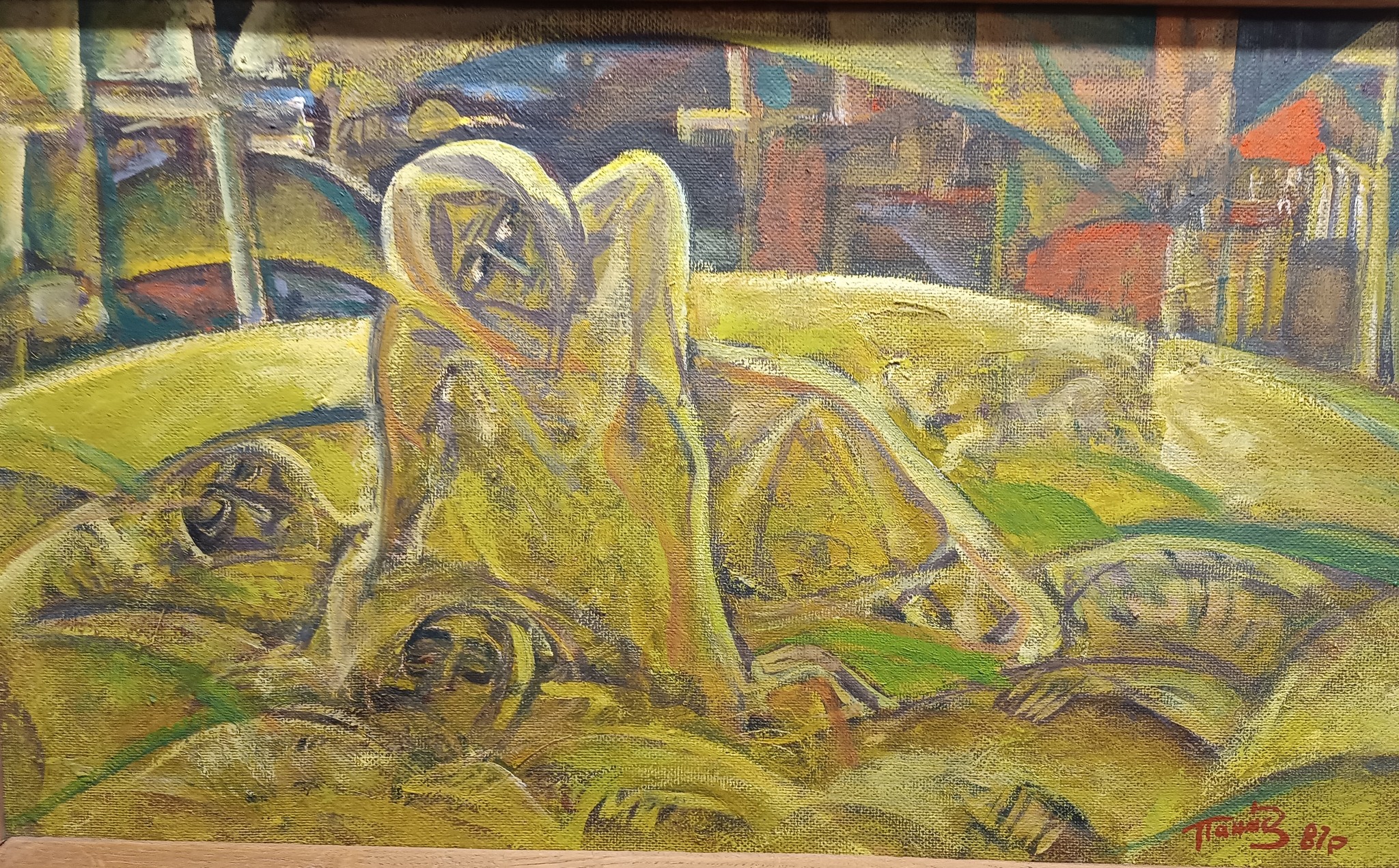
Famine-33. 1987. Source — Facebook page “About Opanas Zalyvakha”.
After the war, Zalyvakha studied painting and sculpture at the Leningrad Institute of Arts. Yet already in his second year, he was expelled — he had ignored a mandatory meeting with a Party appointee. The artist was able to resume his studies only in the mid-1950s, when the repressive order began to soften after Stalin’s death.
A practical placement in Kosiv in 1957 had a profound impact on Zalyvakha: Hutsul culture fascinated him. A few years later, he left his job and home in Tyumen and moved to Ivano-Frankivsk.
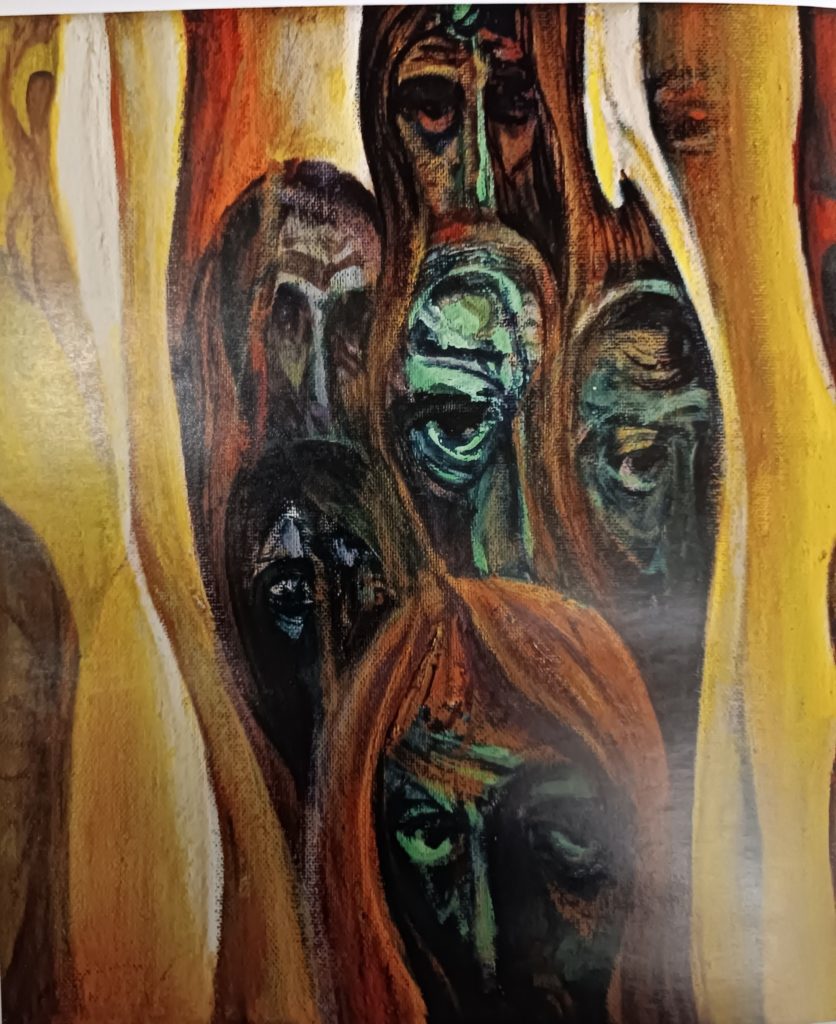
Голодомор. 1991. Джерело — фейсбук-сторінка «про Опанас Заливаха».
In 1964, he was arrested for “anti-Soviet activity,” which in reality meant his civic stance and artworks featuring national symbolism that fell outside the framework of Socialist Realism. The artist spent five years in labour camps and three years in exile. There, he was forbidden to paint — almost as Shevchenko had once been.
Yaryna Zalyvakha recalls: “He painted the Holodomor. The paintings “The Spectre of Communism” and “The Holodomor of ’33” are his works dedicated to this theme. He was one of the first artists to address the Holodomor and Ukrainian political prisoners.”
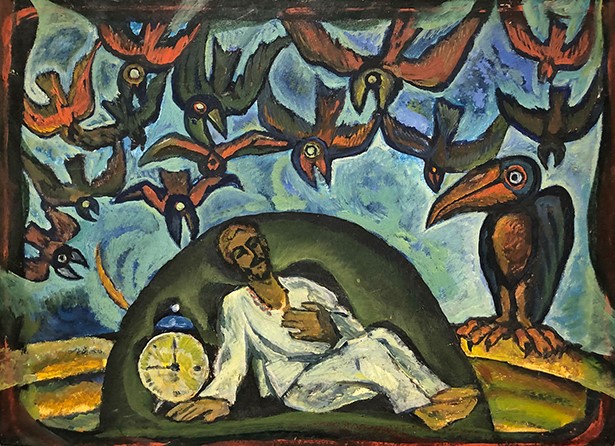
Fate. 1978. Source: Zbruch.
Opanas Zalyvakha passed away on 24 April 2007. Yet he left behind an impressive artistic legacy encompassing painting, graphic art, monumental works (including his contribution to the stained-glass piece “Shevchenko: The Mother”), bookplates, and much more.